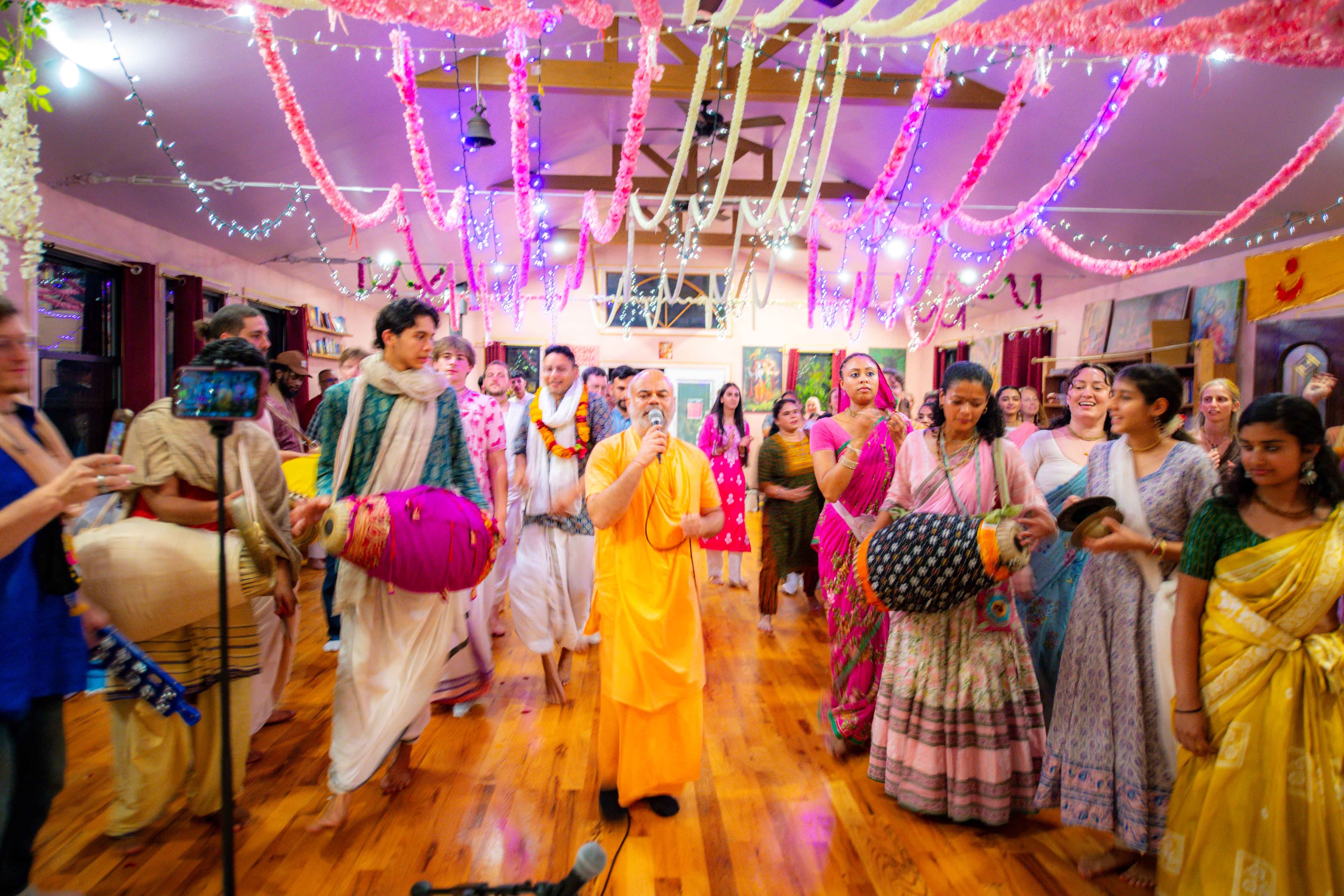
A Festival of Love, Service, and Spiritual Renewal
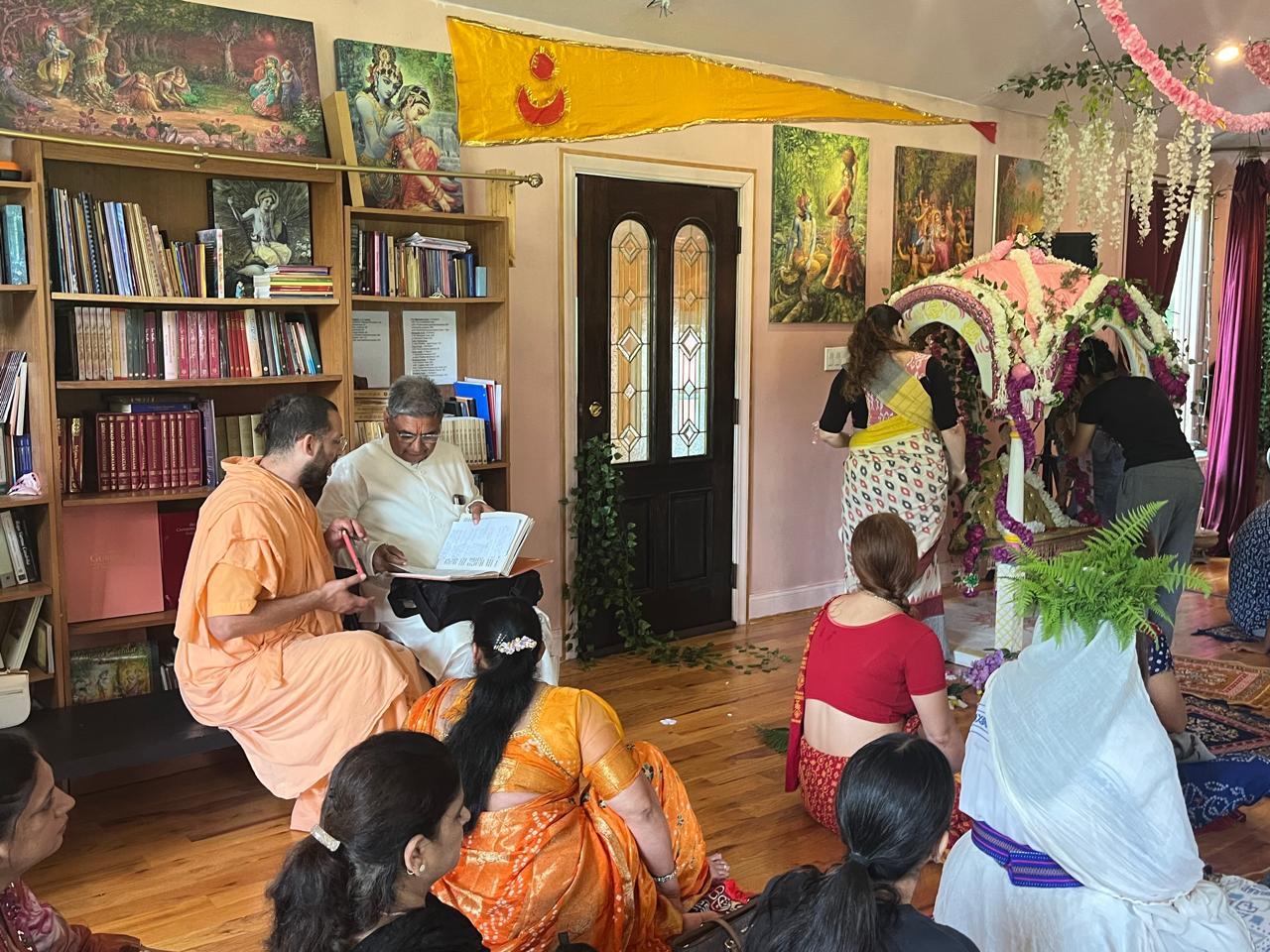
After a long absence from spiritual retreats and the loving association of devotees, we arrived at Bhakta Bandhav Ashram in New York, home of the Serve Love mission, to celebrate the Kheturi Festival without any particular expectations.
We returned home carrying blessings we had never expected: renewed spiritual strength, meaningful friendships, and memories we will carry always.
The festival was deeply uplifting. Through the chanting of the holy names, inspiring hari-kathā, beautiful kirtans, and loving association, I felt my love for Śrī Rādhā and Kṛṣṇa awaken with renewed strength. It was as though something within me, which had been quiet for a long time, had begun to stir again.
I was reminded of the importance of humility, sincere service, gratitude, and the freedom that comes from releasing resentment. The teachings encouraged me to look more deeply within myself and to remember that devotion is expressed not only through prayer and remembrance, but also through the way we treat others.
I used to think devotion was about how much I could do—how many rounds I could chant, how much service I could offer. But that week, I learned something different. Devotion is not about doing more. It is about being more present—with the person in front of me, the fire I am feeding, the song I am singing.
Although I arrived feeling physically weak, the devotional atmosphere gradually restored my strength and enthusiasm. The chanting, the association of devotees, and the many acts of loving service seemed to bring light and energy back into my body and heart.
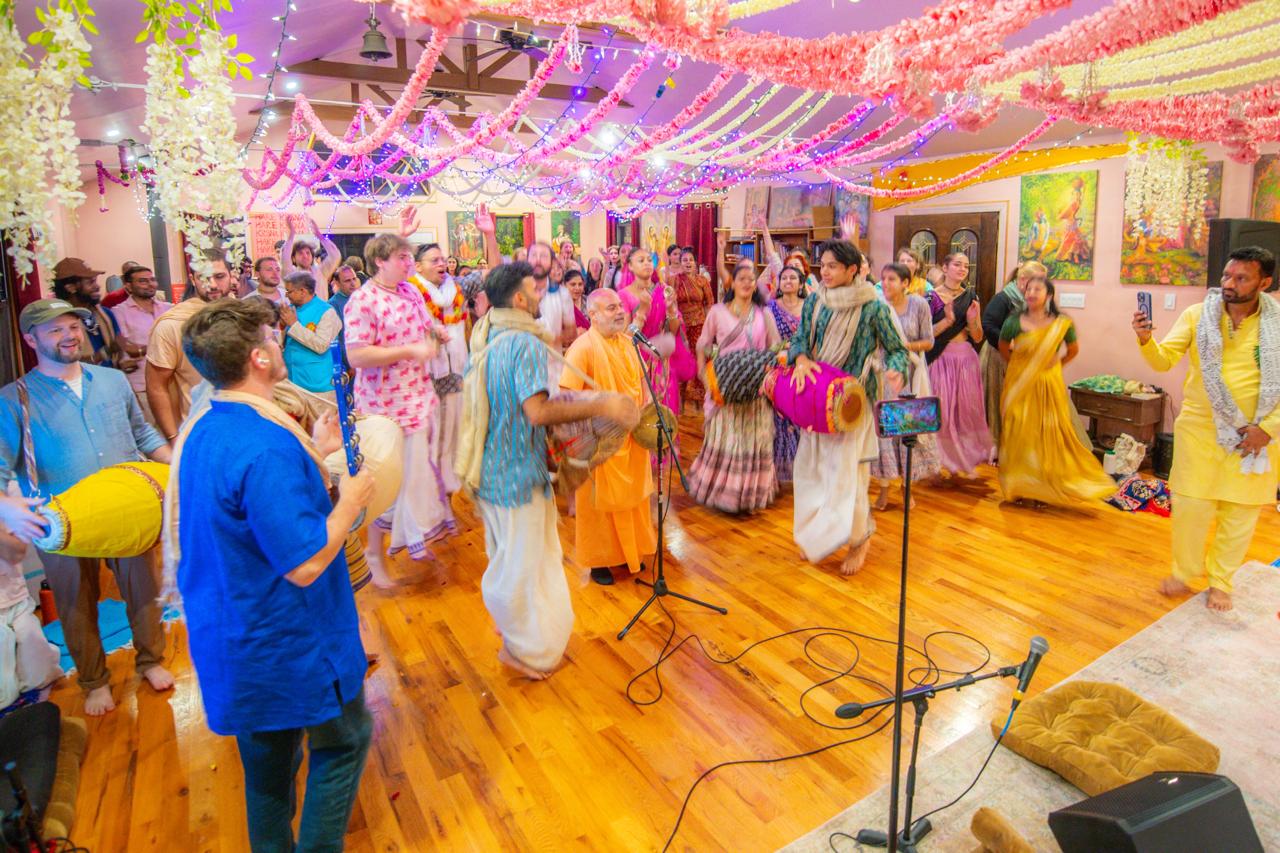
I met devotees from across the US, Hawaiʻi, Canada, and beyond—from islands and cities, from coasts and deserts. We came from different countries, cultures, and personal histories, yet the holy names drew us together into one spiritual family.
The presence of senior devotees—including those from Maui and devotees connected with both Śrīla A. C. Bhaktivedanta Swami Prabhupāda and Śrīla Bhaktivedānta Nārāyaṇa Gosvāmī Mahārāja—brought depth, strength, and inspiration to the gathering.
One of the festival's most admirable qualities was its open-minded and nonsectarian spirit. Devotees from different cultures, communities, and spiritual backgrounds were welcomed with affection. Sikh devotees and members of other groups were also invited to sing kirtan with us.
Hearing people from different traditions share the holy names created an atmosphere of unity, respect, and mutual appreciation. As the voices rose together, the differences between us seemed to soften. Each tradition brought its own beauty, yet all were joined in a common offering of love.
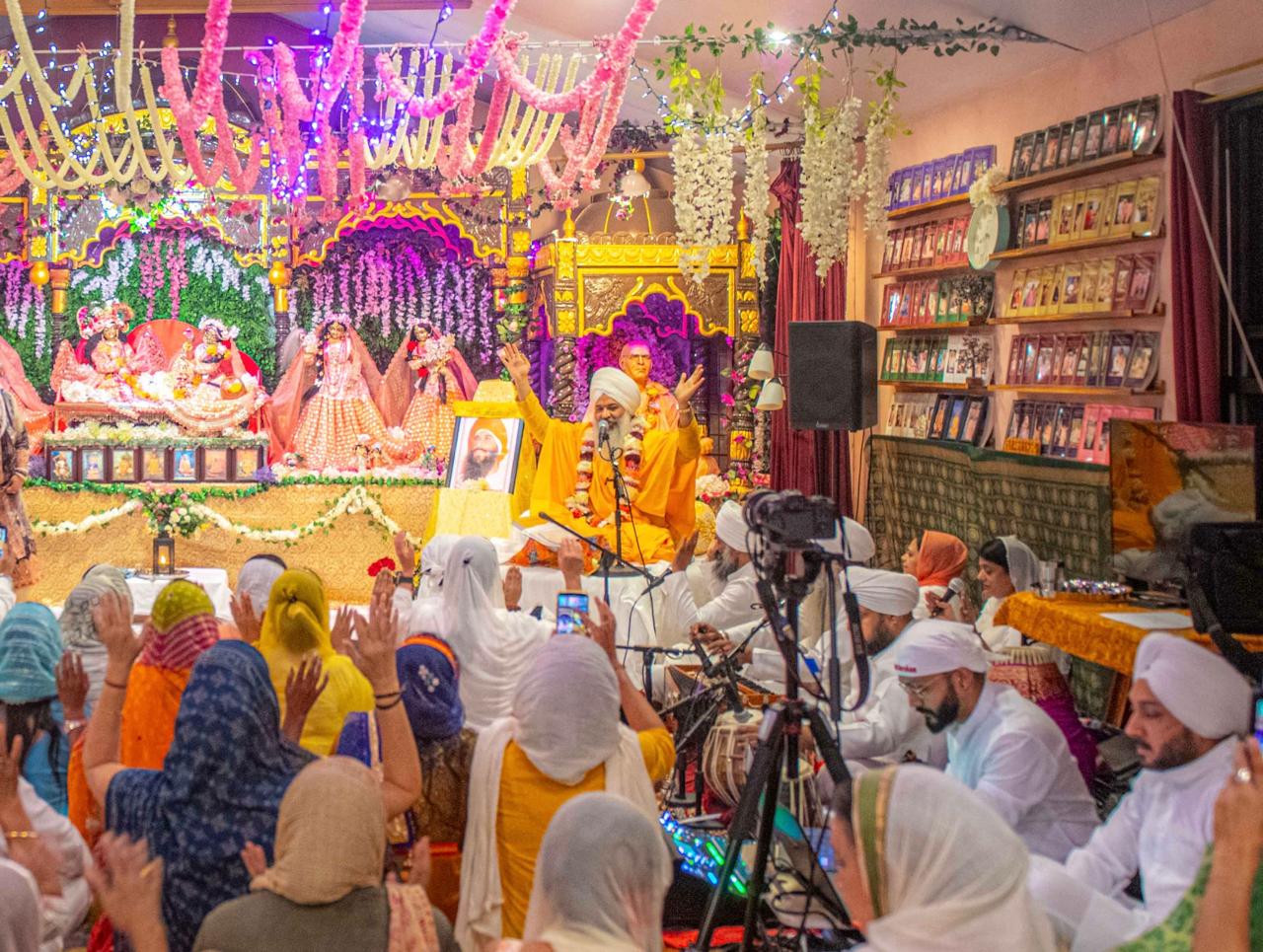
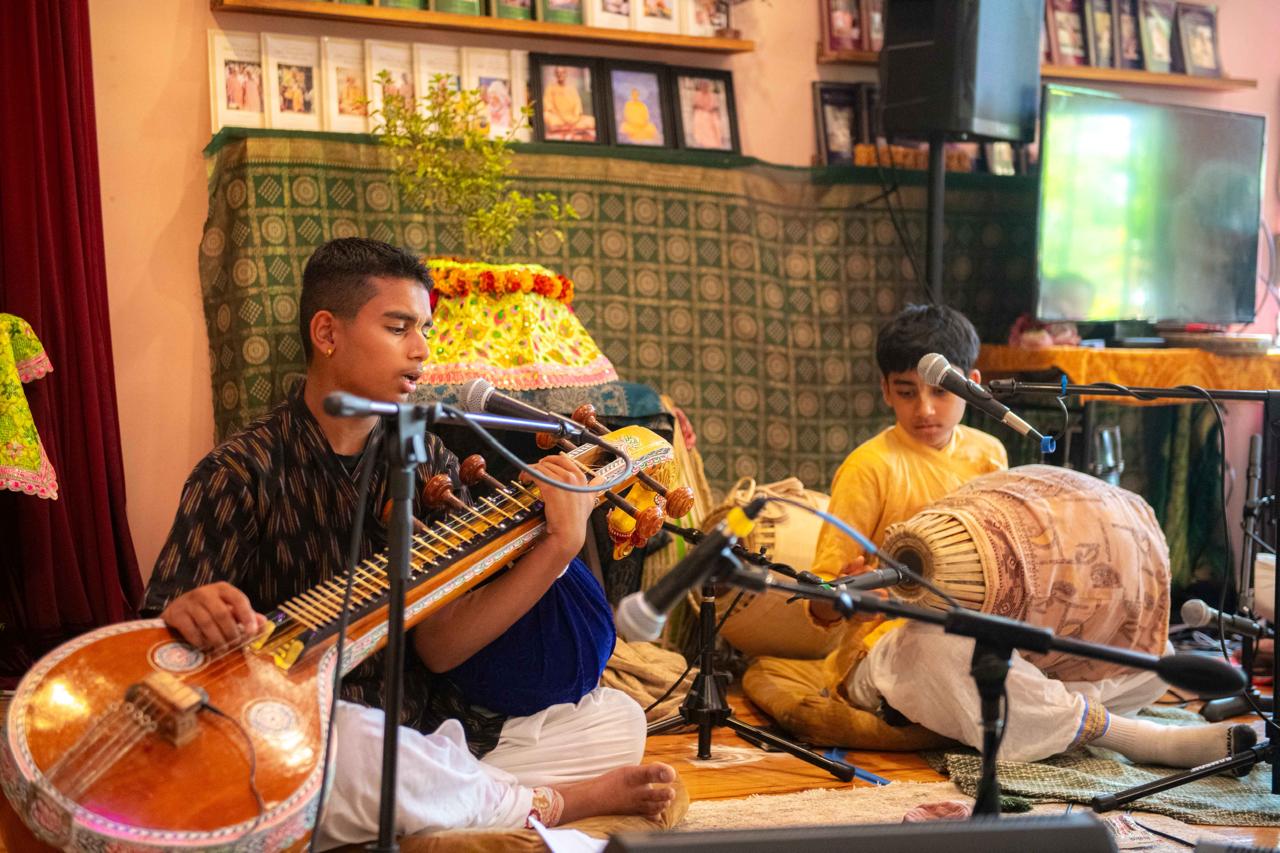
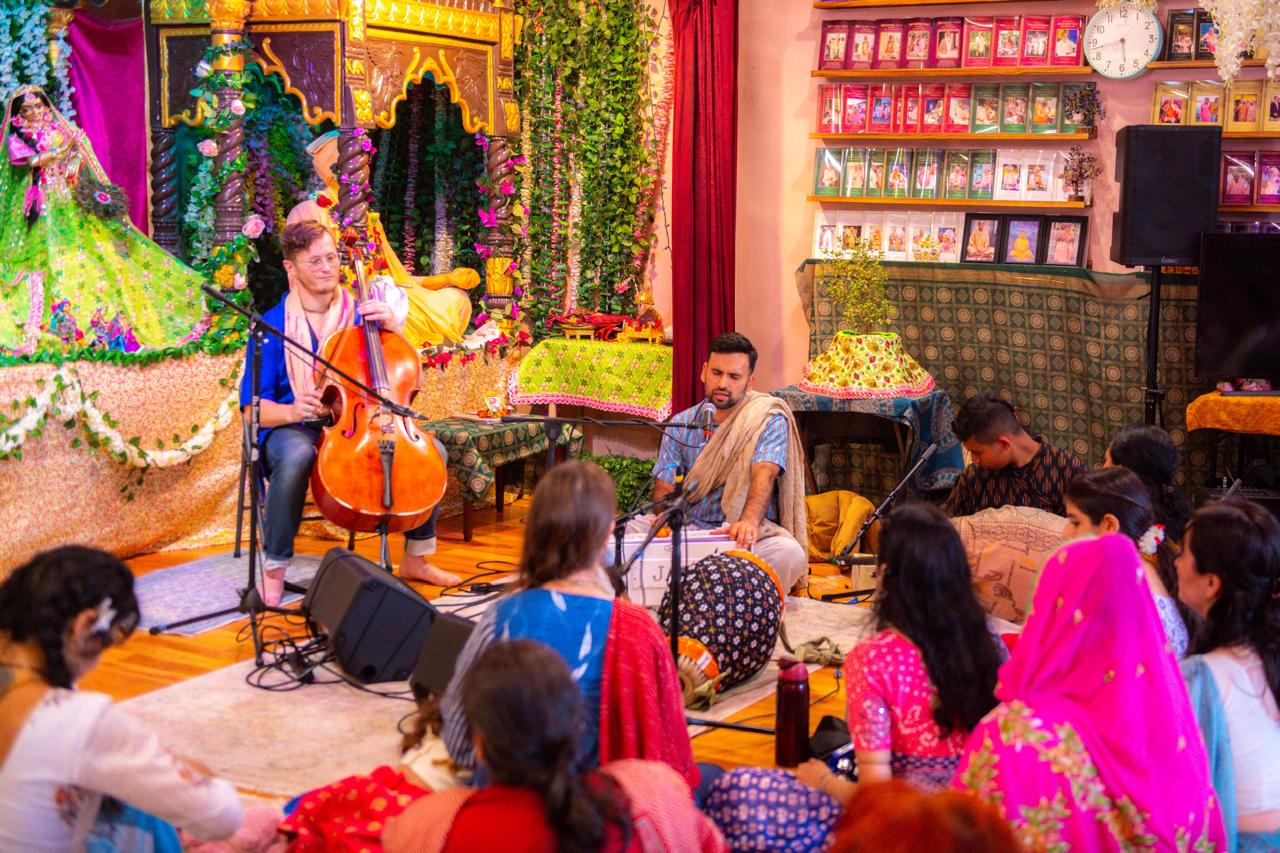
Singers from across the continent shared their voices, accompanied by instruments spanning many cultures—harmonium, mṛdaṅga, cello, guitar, violin, sitar, and more. Each voice carried its own accent of love. During the sweet Braj bhajans and "Rādhe Jhūlan Padhāro," the music lifted us, and I could not stop dancing. The heart itself became a swing, gently moving in remembrance.
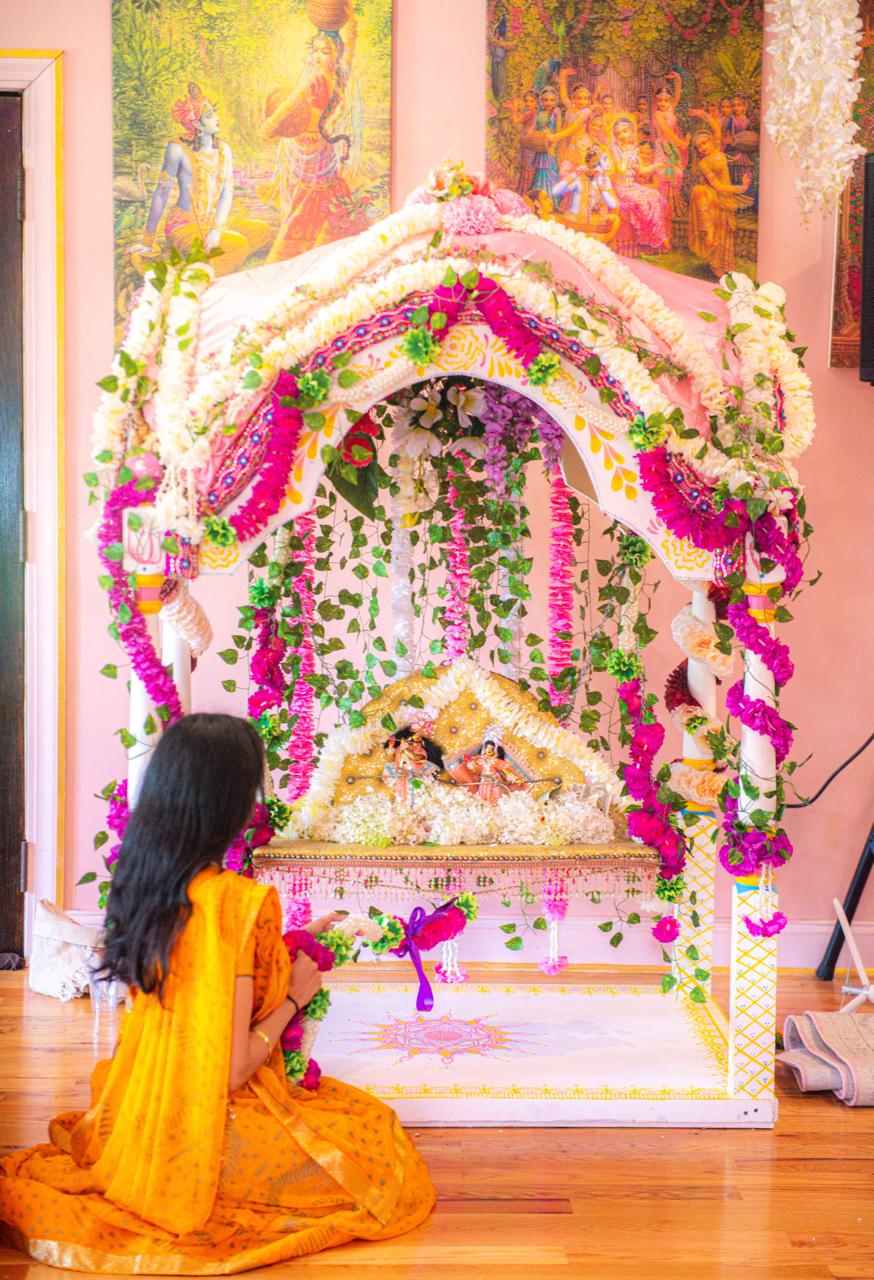
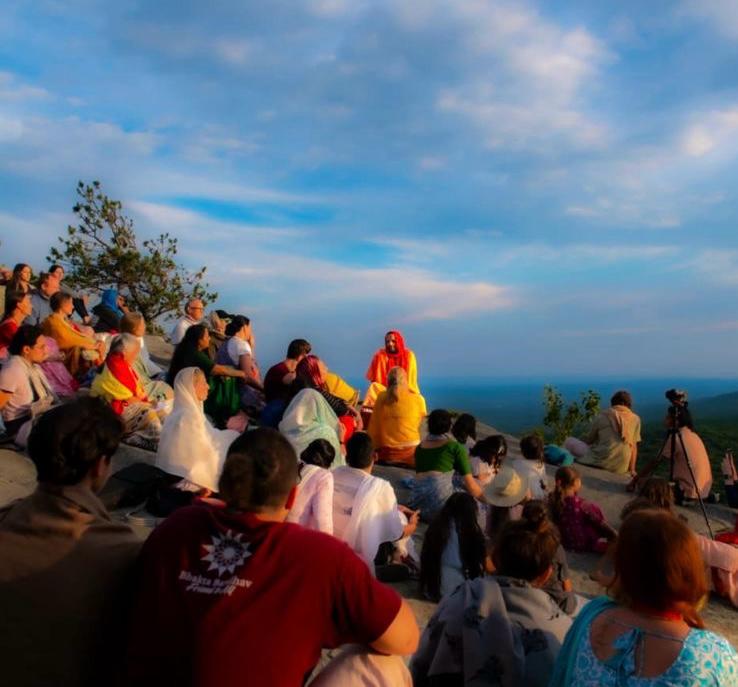
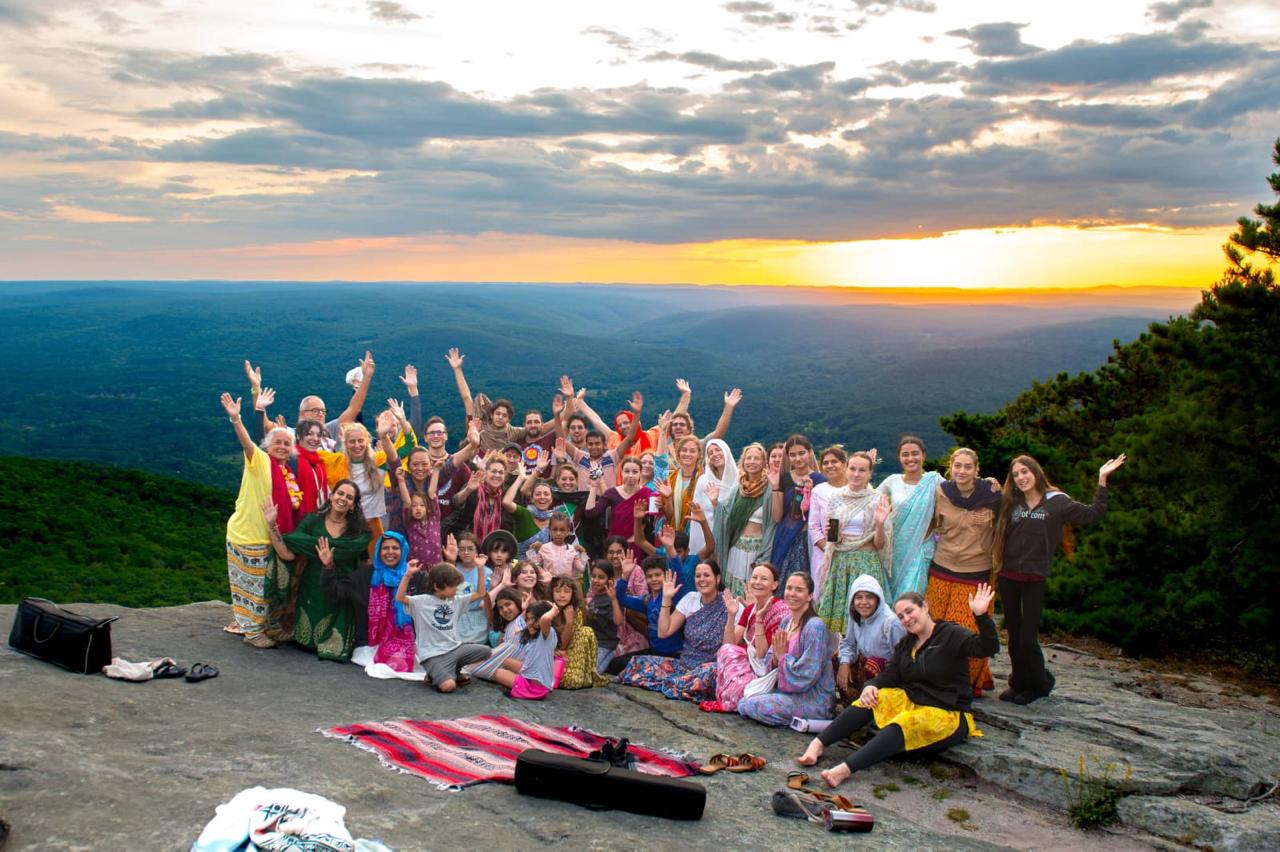
When adults and children hiked together through the forest to the cliffs while chanting kirtan, the singing continued as we walked, and our voices moved through the trees and along the forest path. By the time we reached our destination, everyone had become united in a shared mood of joy and devotion. The journey itself became part of the celebration. With every step, the chanting seemed to draw us closer to one another.
Beneath the open sky, surrounded by the beauty and stillness of nature, we continued singing and listened to Mahārāja speak about Śrī Kṛṣṇa and the guru. The trees stood quietly around us, and the natural world seemed to become part of our gathering.
Although I do not remember every detail of his lecture, I remember being deeply moved by the atmosphere. There was a special sweetness in sitting together in nature, listening to kirtan and hari-kathā, while adults and children shared the same mood of devotion.
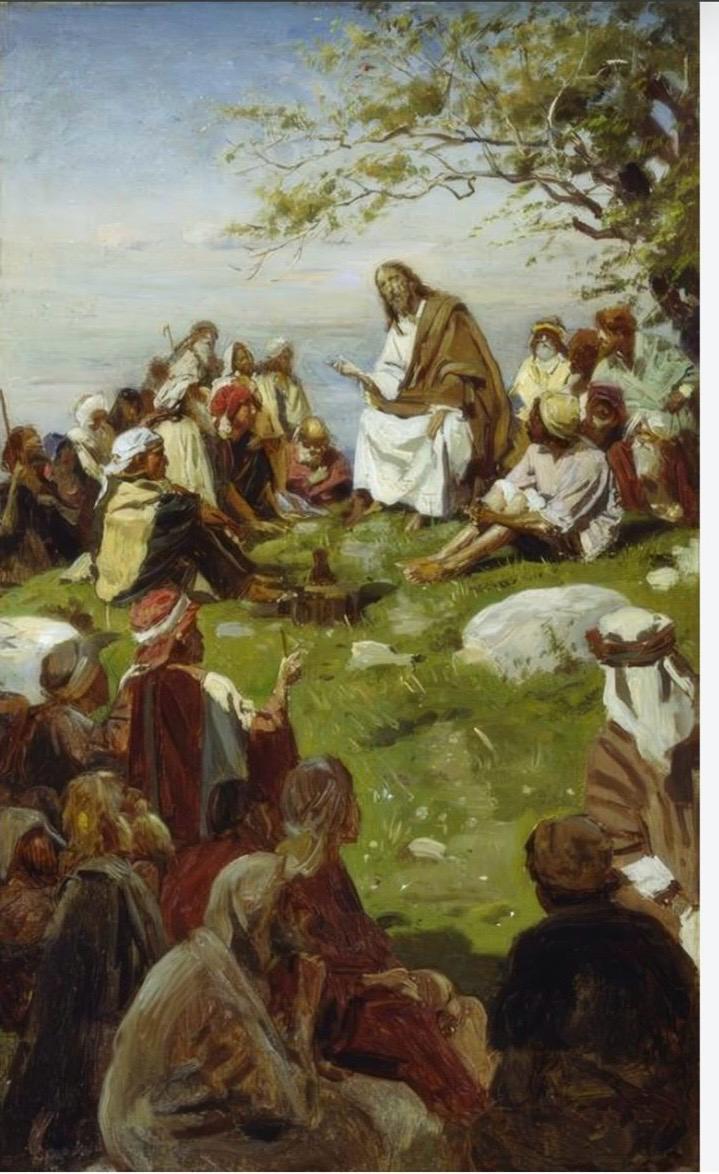
The scene reminded me of The Sermon on the Mount—people from different walks of life gathered in nature, listening attentively to spiritual teachings. Our experience felt like a living version of that painting, a real gathering of adults and children from different cultures, united through kirtan and devotion. It was a reminder that sincere spiritual teachings can touch the human heart wherever it comes from.
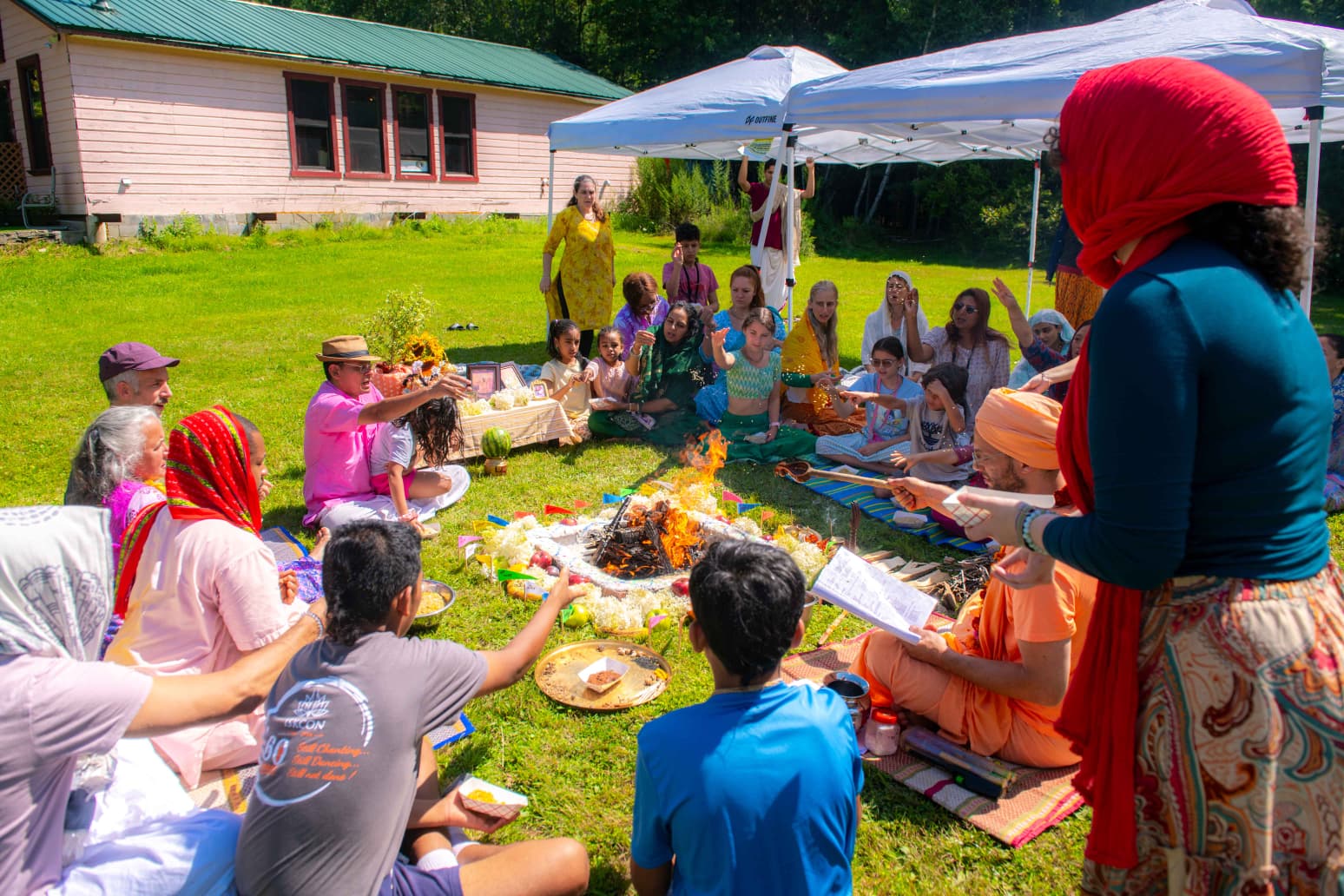
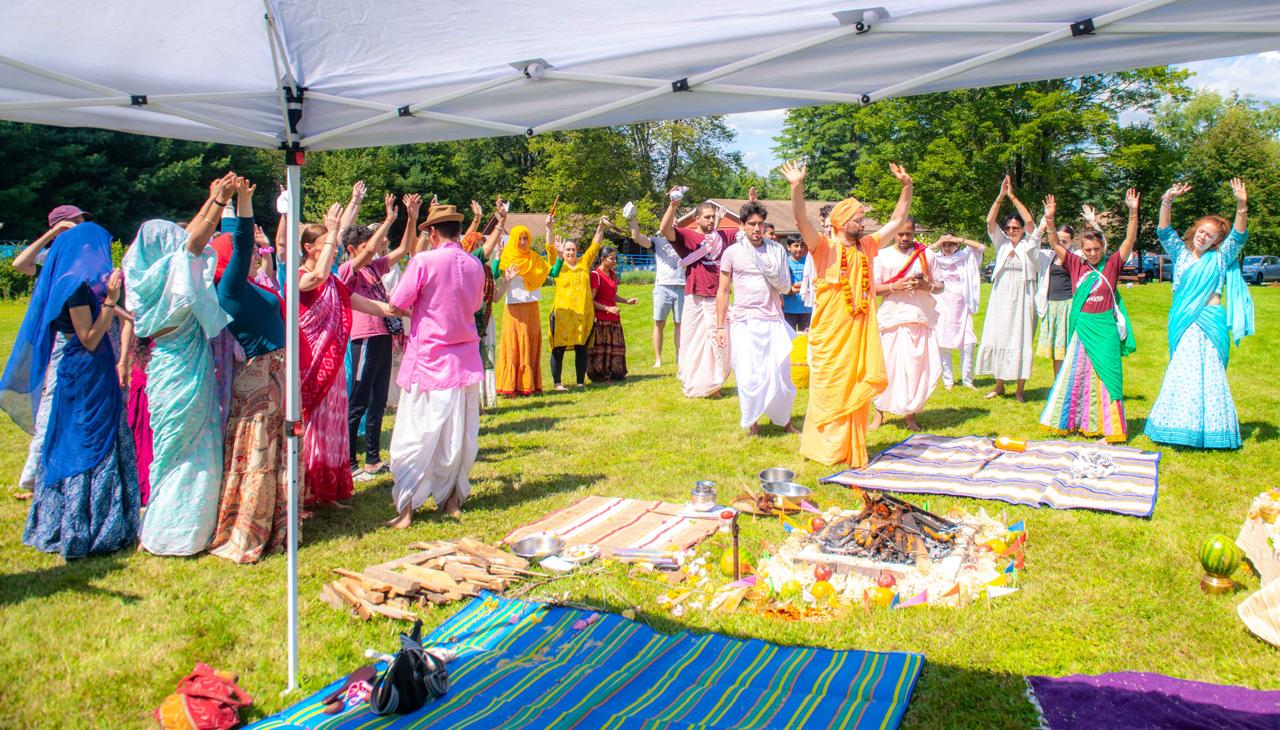
Everyone participated in the yajña ceremony. Mahārāja chanted sacred mantras while we offered prayers and placed offerings into the sacred fire—performed to please Śrī Kṛṣṇa and honor creation. As offerings entered the fire, negativity seemed to dissolve and the atmosphere felt purified. The ceremony left us with a deep sense of spiritual strength, as though the fire had consumed not only the offerings but some of the heaviness we carried.
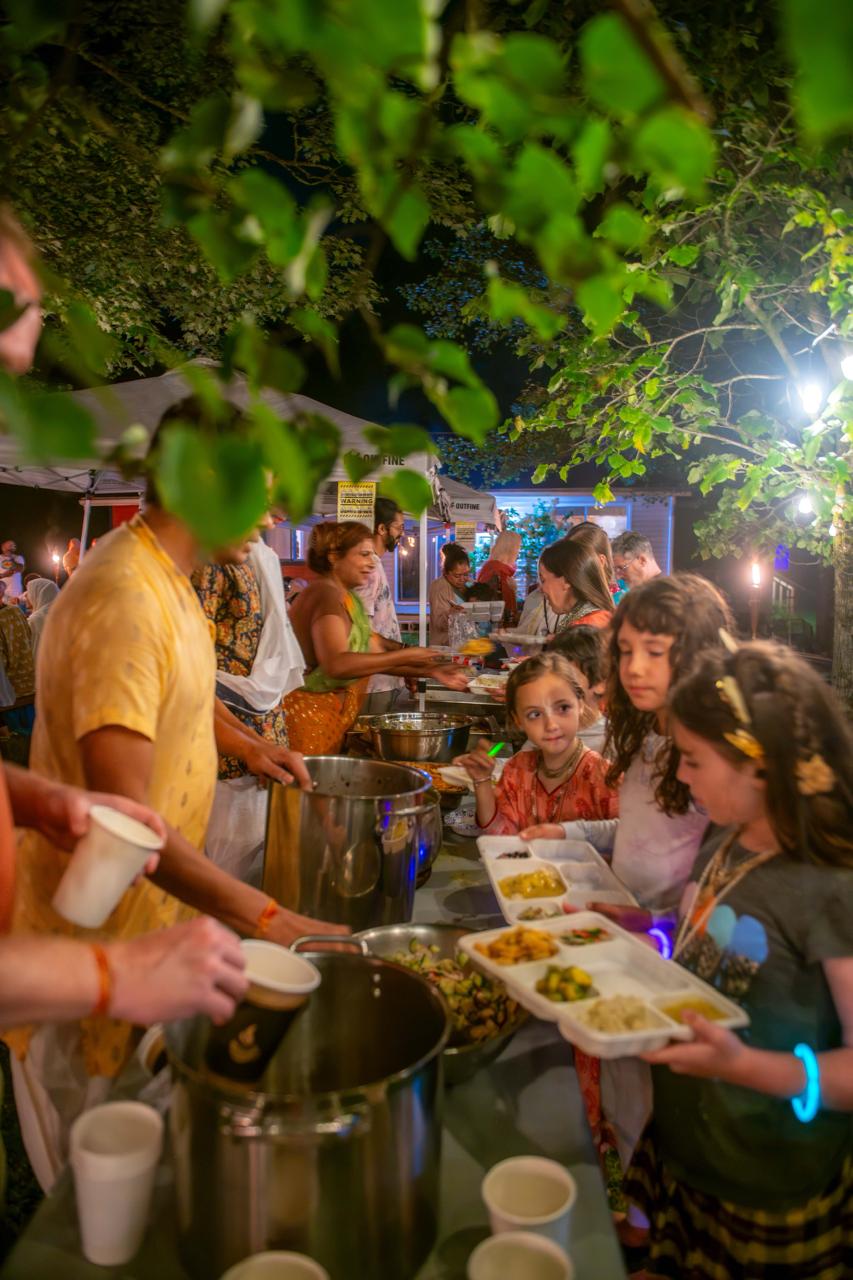
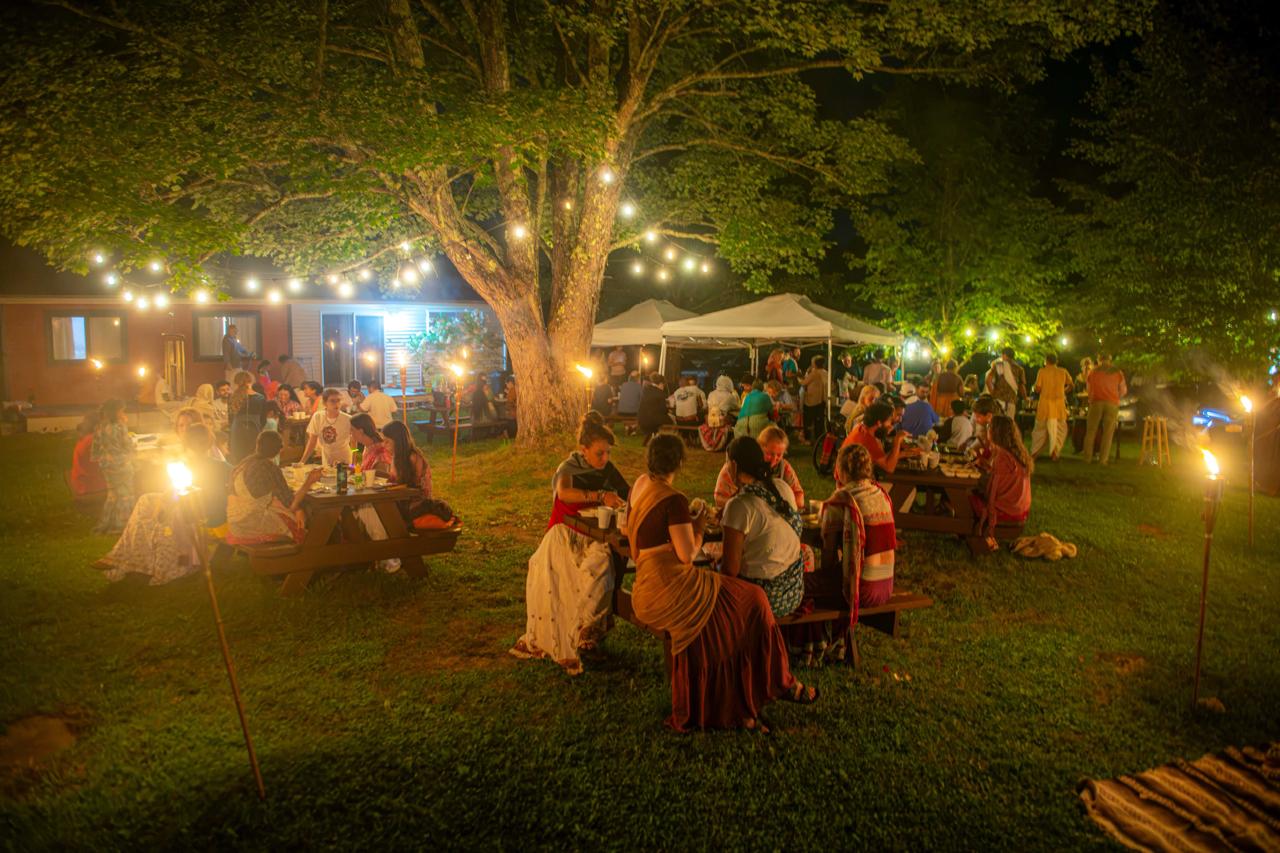
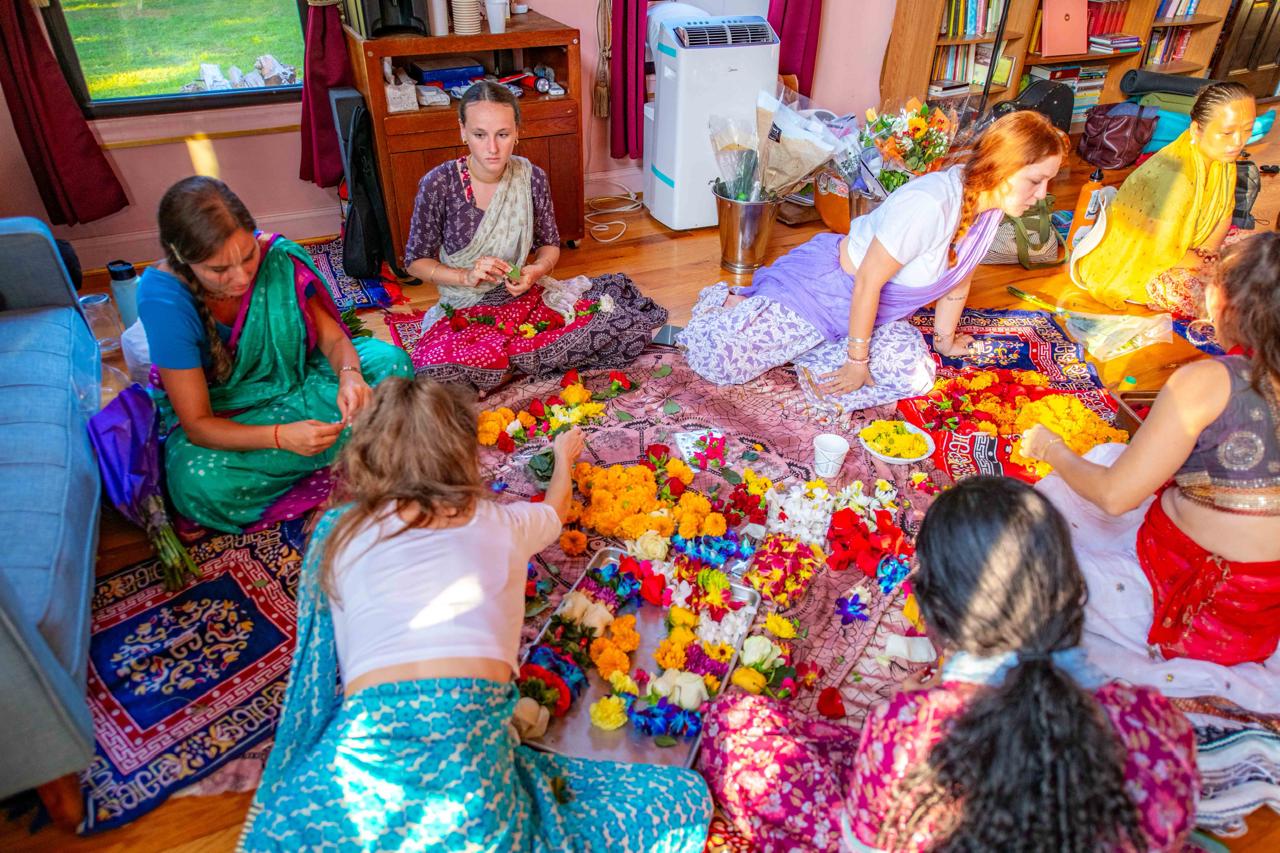
Prasādam was another expression of loving service. Devotees spent many hours preparing meals for several hundred people, observing Cāturmāsya restrictions while creating an extraordinary variety of delicious dishes. The food nourished us physically, but the love behind it nourished us spiritually.
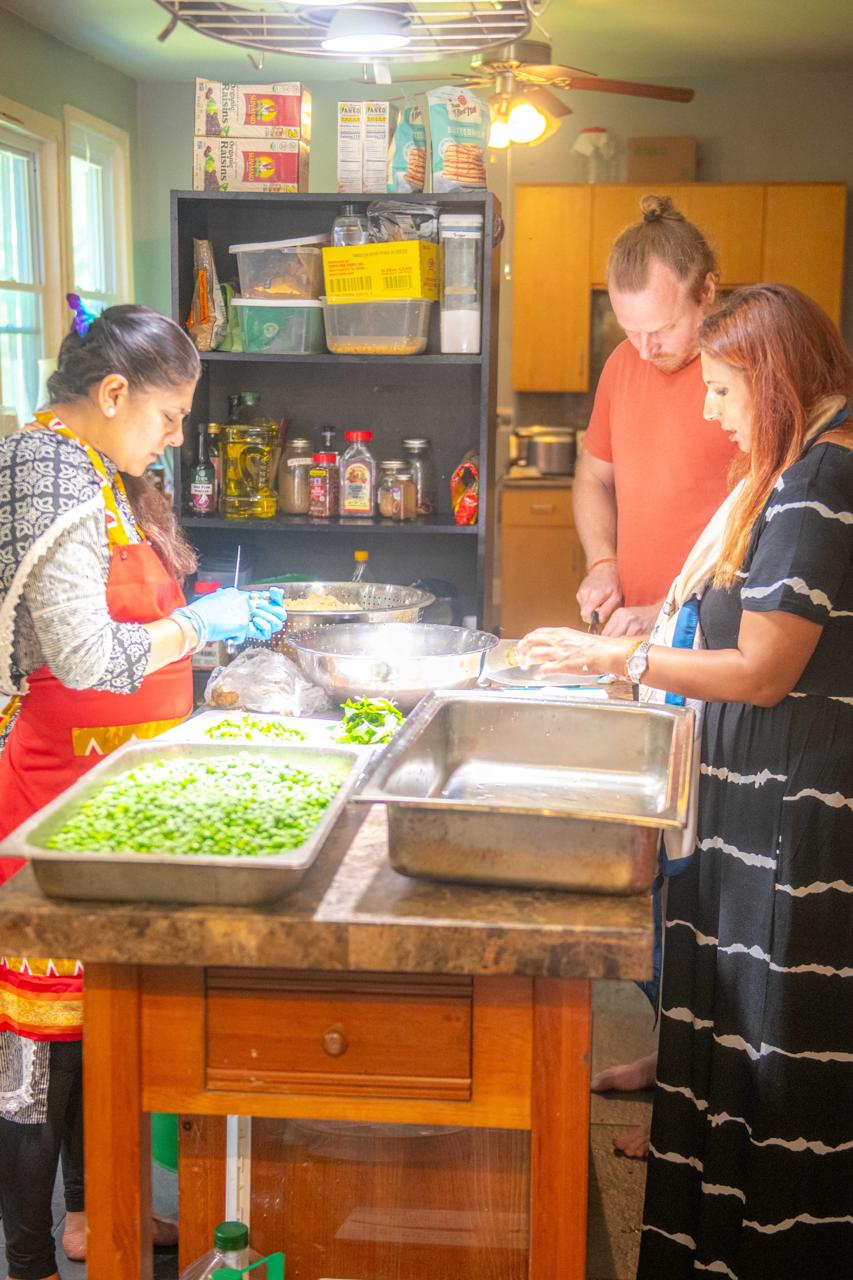
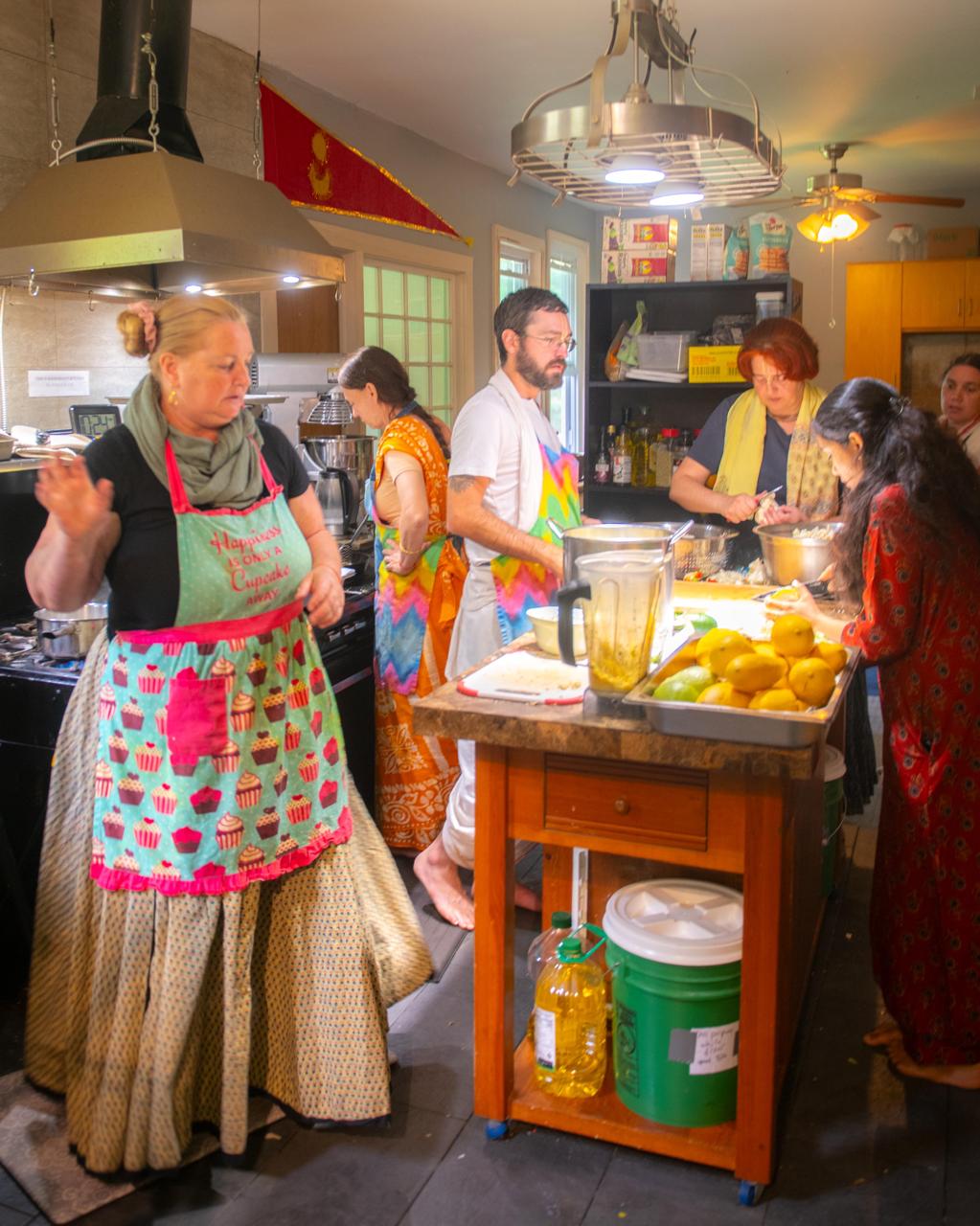
The enchiladas, cookies, and cakes prepared by Śyāma Priya Didi were especially memorable. She cooked for the entire group, standing on her feet for hours while remaining joyful. Though tired, her cheerful spirit never faded. Through her service, she offered much more than food—she offered her time, energy, patience, and love.
Evenings around the campfire were filled with laughter, conversation, and s'mores. We all burned our marshmallows at first, but those mishaps only added to the fun. Hari especially enjoyed finding his own stick and proudly roasting his marshmallow, his happiness glowing in the firelight.
Later, the peaceful darkness and flickering firelight provided the setting for late-night kirtans. The flames cast their gentle light upon the devotees, while the chanting rose into the night. Those late-night kirtans became the perfect conclusion to each day. After the laughter and conversations had quieted, the holy names gathered us once more, carrying the festival gently into the darkness.
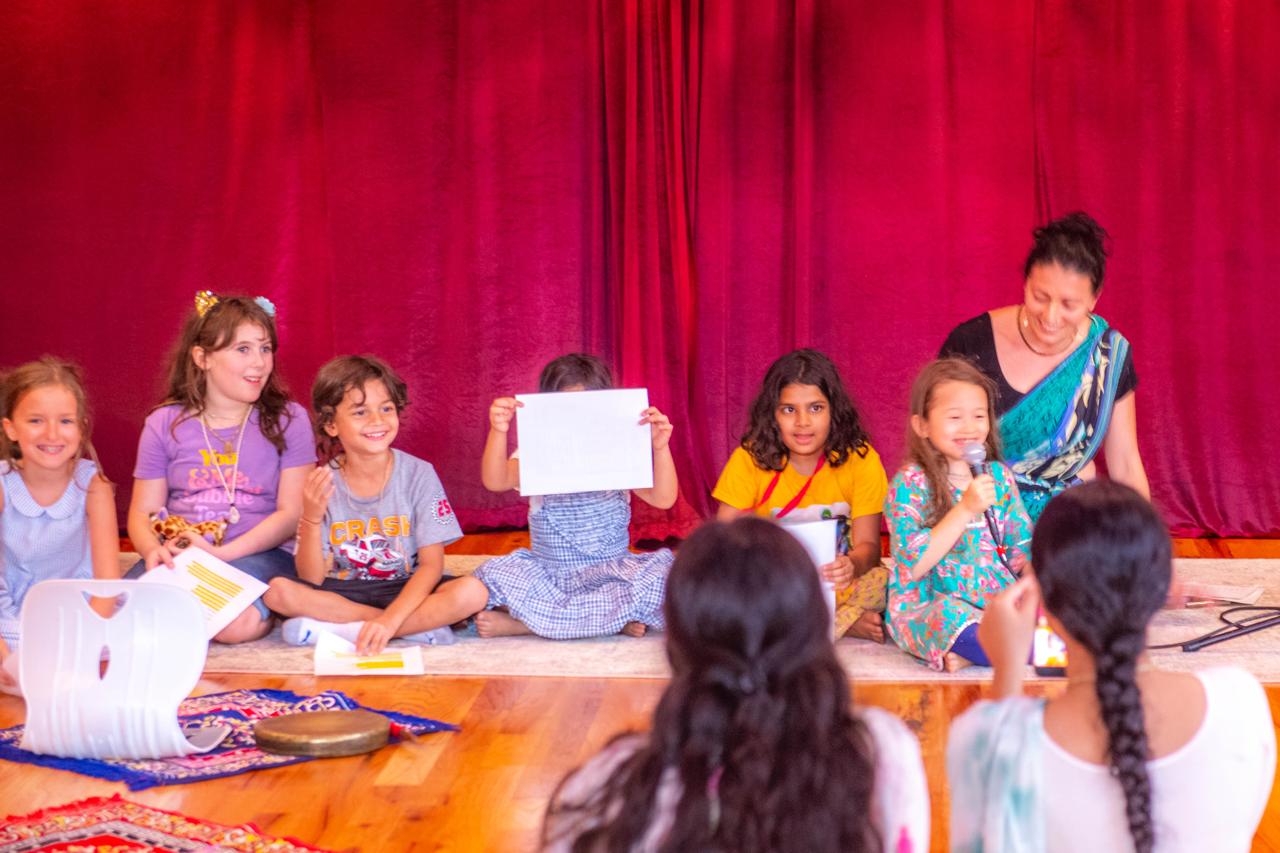
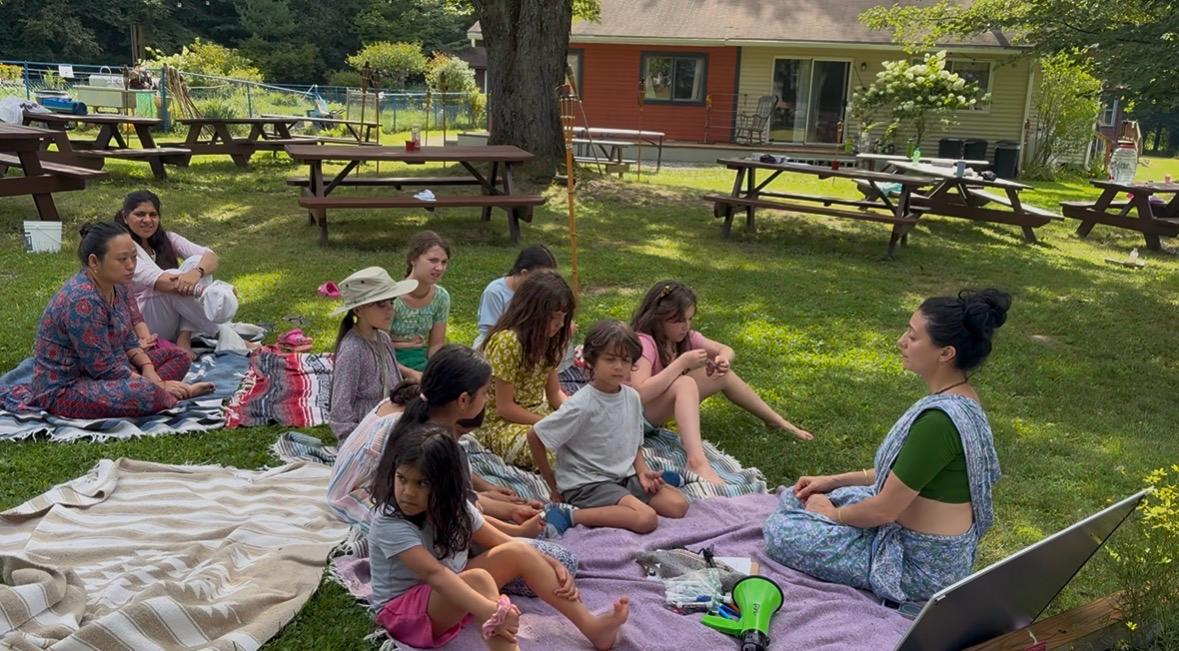
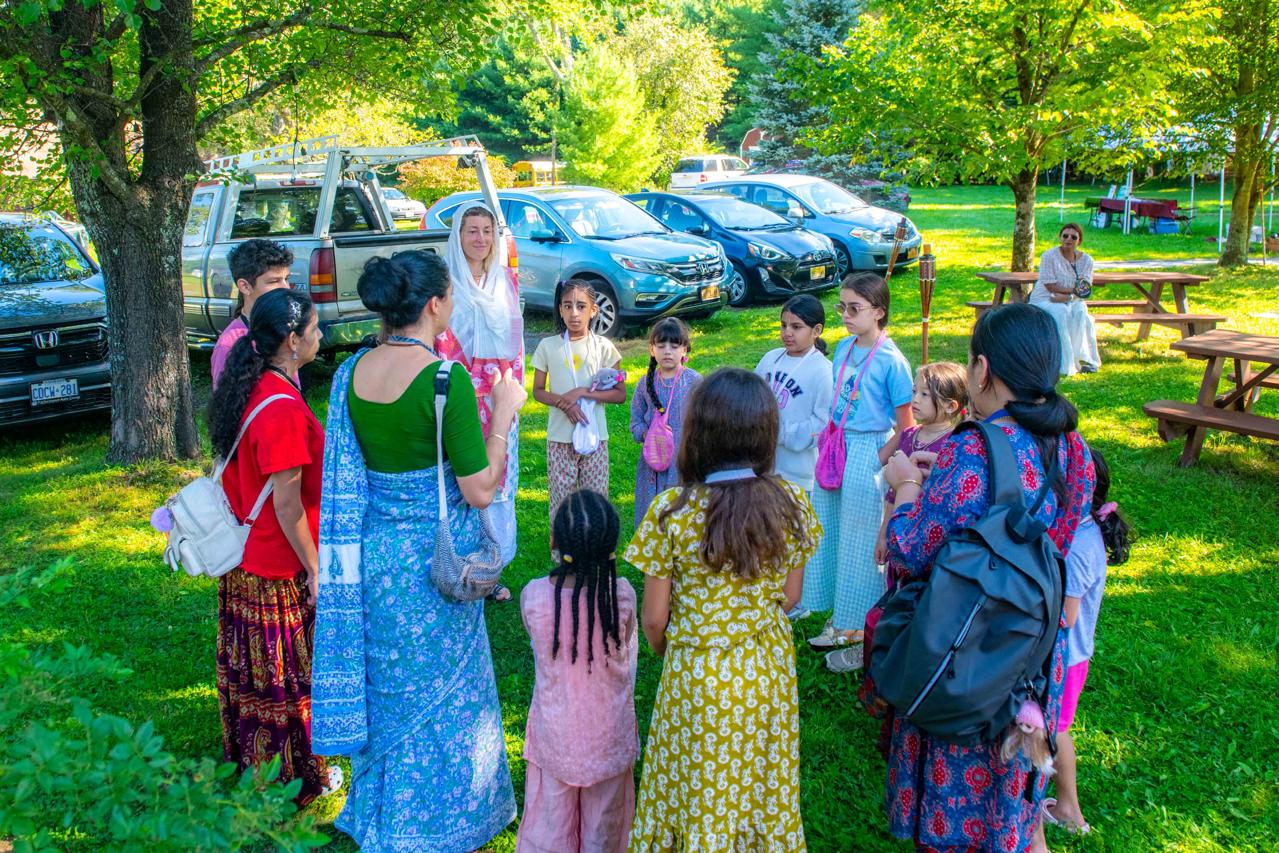
The children filled the ashram with movement and laughter—japa walks, archery, dance, music, and drama. They brought the pastimes to life through two plays: one about Krishna lifting Govardhan Hill, the other about the origins of the Kheturi Festival. They delighted everyone who watched them. Watching them, I saw the pastimes through fresh eyes, and the sacred stories felt alive again.
The Kheturi Festival was first celebrated in 1581 in Bengal, inaugurated by Śrīla Narottama Dāsa Ṭhākura to unite devotees from different lineages in chanting, hari-kathā, and shared love for Śrī Rādhā and Kṛṣṇa. Its enduring legacy is a spirit of nonsectarian unity—a reminder that the holy names transcend all boundaries.
Trips to the cliffs and caves, and swimming in the river, gave the children opportunities to explore and enjoy nature together.

I am especially grateful to Malini Didi, who organized and managed the children's camp with great dedication, care, and skill. She carried many responsibilities while remaining attentive to the needs and happiness of the children. I am also deeply thankful to her for inviting me to a gathering that touched my heart more deeply than I could have imagined.
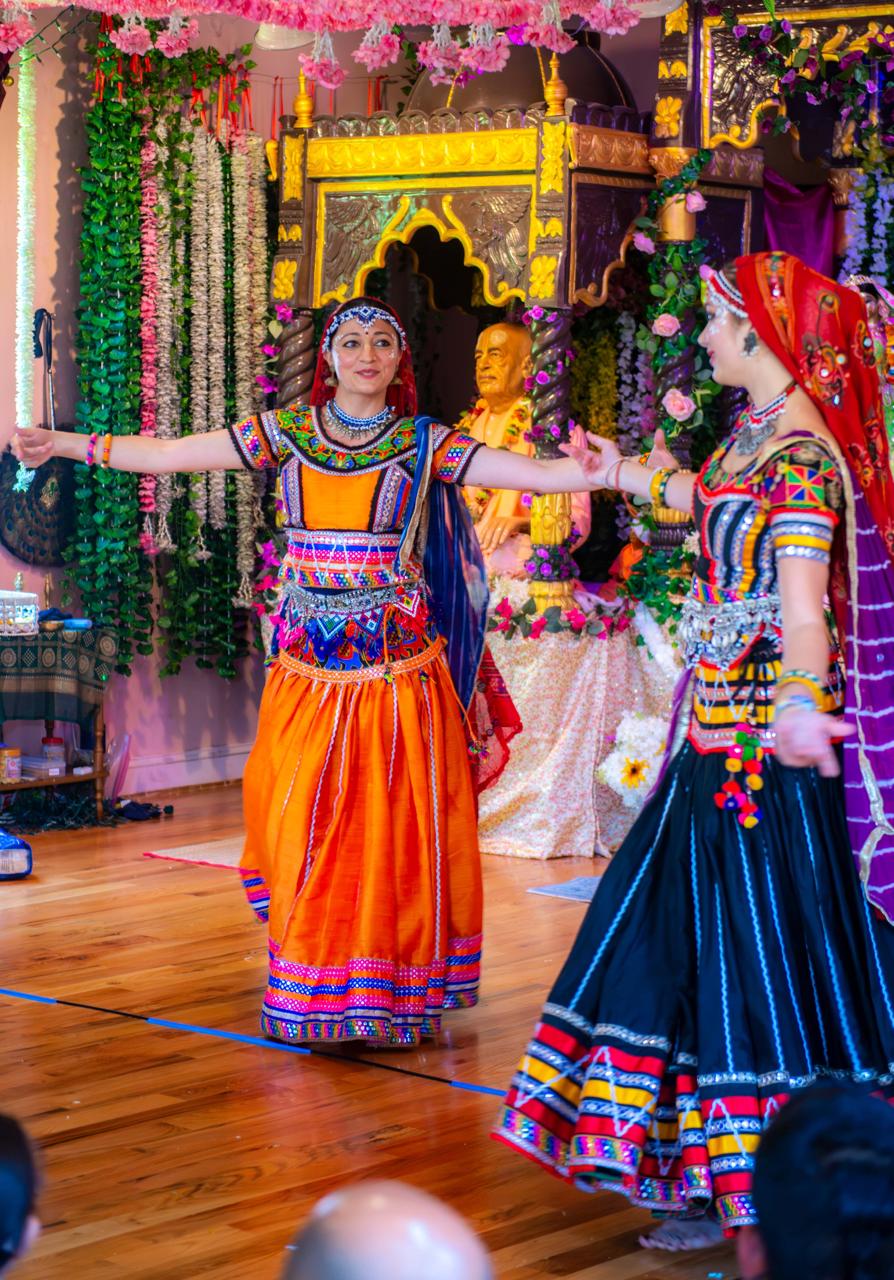
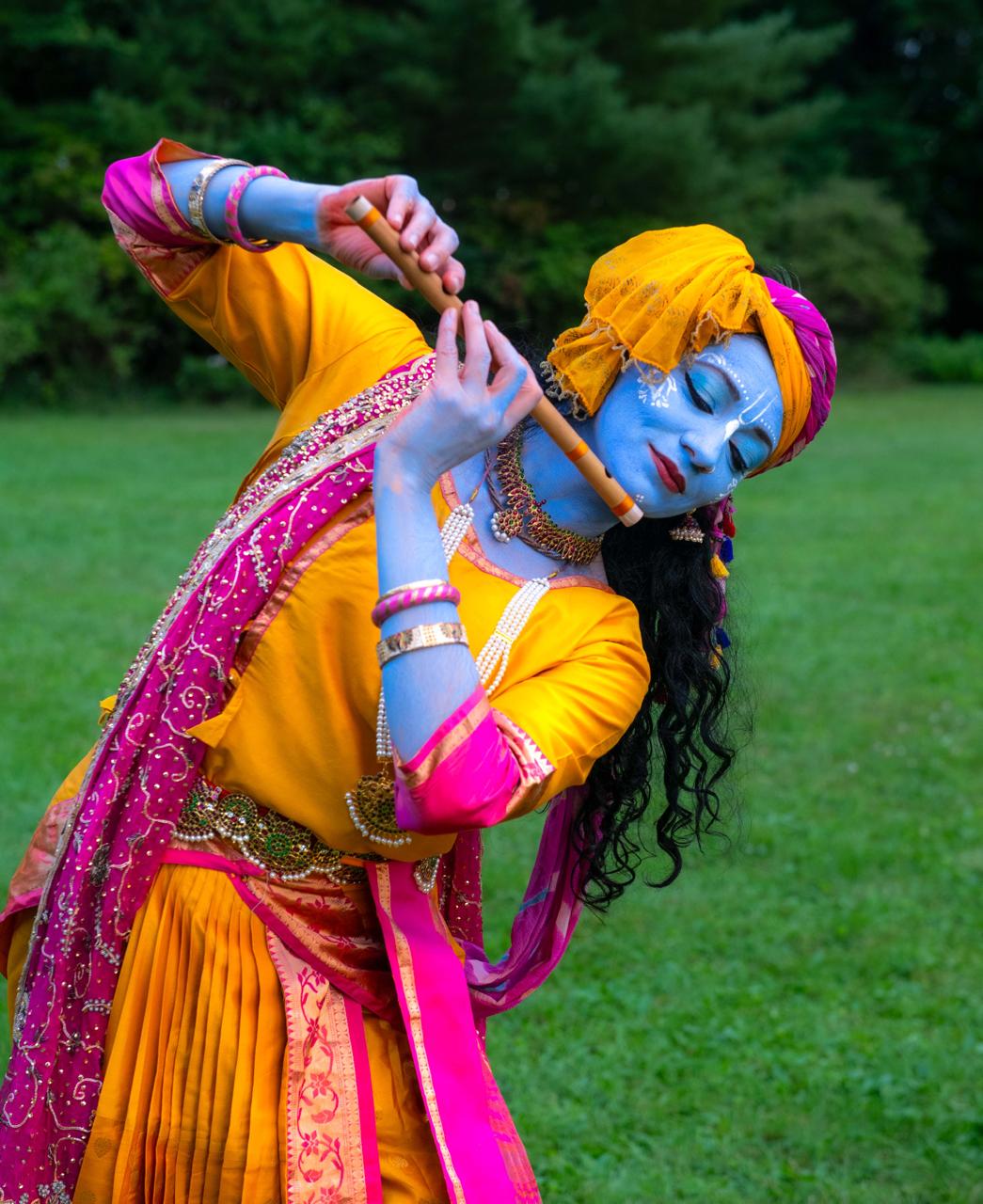
It was a joy to watch Malini Didi and other devotees perform dance dramas depicting the divine pastimes of Śrī Rādhā and Kṛṣṇa. Through music, movement, and expression, they brought these sacred stories to life. Their performances seemed to lift the pastimes from the realm of memory and place them before us again, filled with movement, beauty, and feeling. They offered everyone a glimpse of the sweetness of the spiritual world.

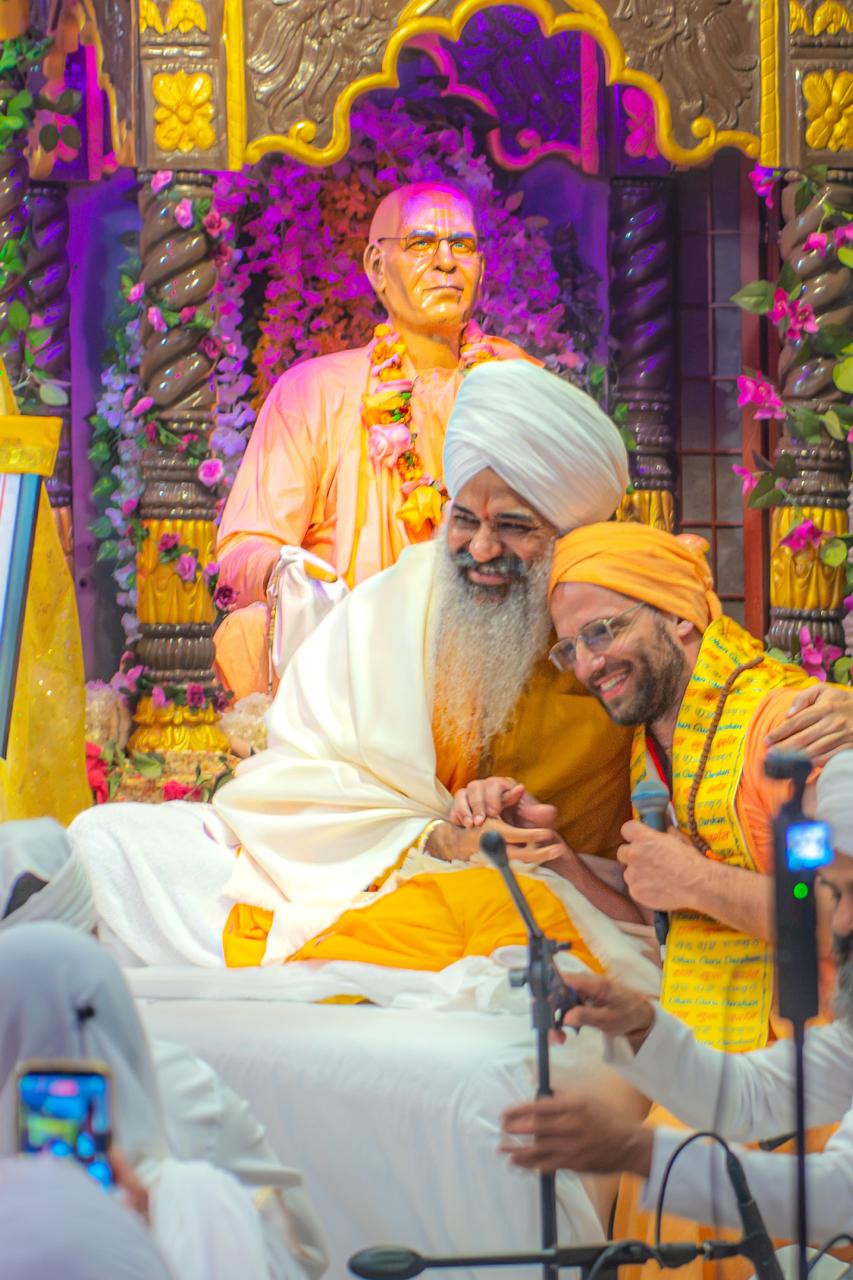
Above all, I was moved by the example of B. B. Rasikānanda Swami Mahārāja. He welcomed every guest with humility, affection, and warmth and personally cared for the devotees' comfort. He personally served prasādam, waiting until everyone else had eaten before taking his own meal. He did not simply instruct others to serve; he served with his own hands.
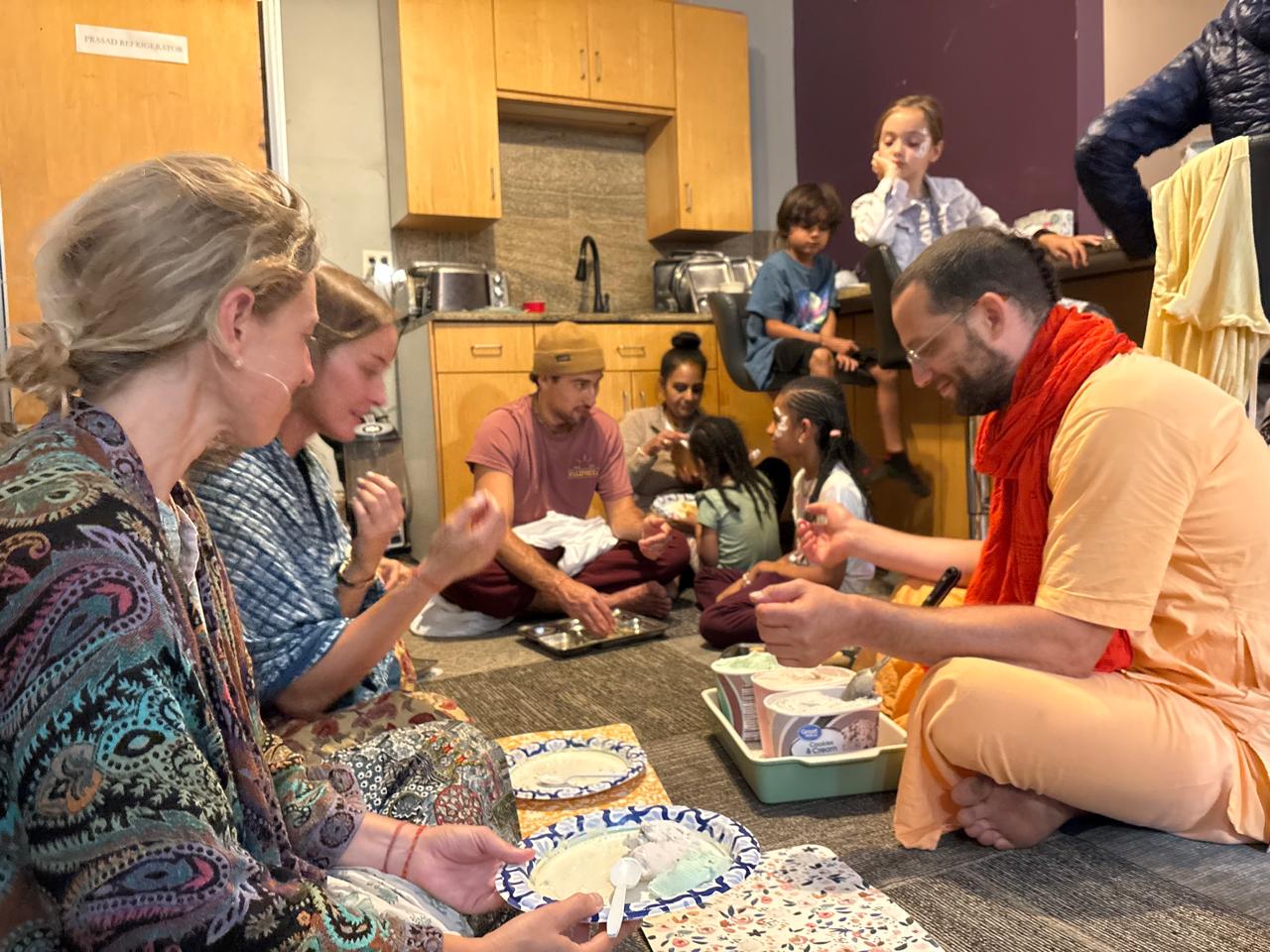
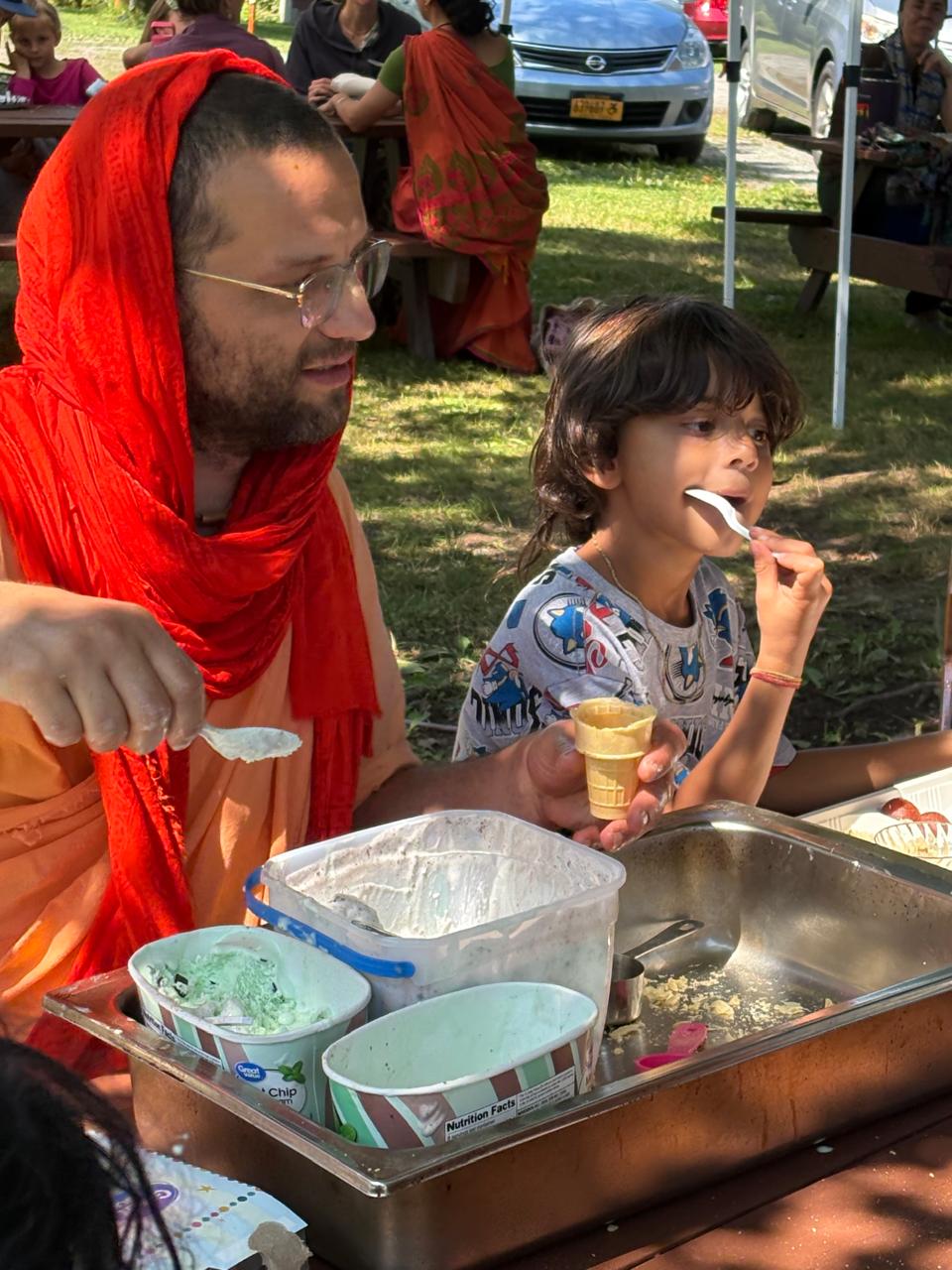
 His affection for the children was especially touching. He lovingly offered them ice cream and cake with his own hands, bringing happiness to their faces and making each child feel noticed and valued. In those simple gestures, his tenderness became visible. Each child seemed to feel that they were important, remembered, and loved.
Although he is a sannyāsī, Mahārāja remained humble and approachable. He would even offer daṇḍavat praṇāmas to other devotees, honoring them with sincere respect. His humility did not diminish his spiritual position. Instead, it revealed the depth of his realization. He showed that genuine spiritual strength is not expressed through pride or distance, but through kindness, respect, and the willingness to serve.
His broad-minded nature deeply resonated with me. He honored people from different cultures, traditions, and backgrounds while remaining firmly rooted in devotion to Śrī Rādhā and Kṛṣṇa. Through his teachings and daily conduct, he showed that genuine spiritual life is expressed through compassion, gratitude, selfless service, and respect for others. Devotion was not merely something he spoke about; it could be seen in the way he welcomed people, served meals, cared for children, and encouraged devotees.
His hari-kathā on the pastimes of Śrī Rādhā and Kṛṣṇa was deeply touching—bringing Their sweetness to life while offering practical guidance on serving those who serve others, and emphasizing the teachings of Upadeśāmṛta.
His words encouraged us to look beyond our own spiritual inspiration and to consider whether we were supporting and caring for the people who quietly served others. During one lecture at the temple, his voice faltered with emotion and tears filled his eyes as he spoke about service, gratitude, and the need to care for those who serve the Vaiṣṇavas. His sincerity touched everyone present. His emotion revealed that these teachings were not merely ideas to him. They had become living truths within his heart.
His words encouraged me to examine my own attitude and cultivate a deeper spirit of service. They reminded me that spiritual life is not only about receiving inspiration, but also about becoming a source of shelter, kindness, and support for others. Despite enormous responsibilities and limited support, Mahārāja never became frustrated or overwhelmed. He remained peaceful and joyful, moving through challenges with grace. His calmness reflected one rooted in devotion—like a tree steady through changing weather, offering shelter to others.
Mahārāja once shared that, during his childhood, he received great love from his parents and teachers in the gurukula. Now, he said, he was simply returning that love and sharing it with others. His words revealed the source of his kindness. The love he had received had not ended with him. It continued to flow outward, touching everyone around him. It was as though the love of his childhood had become a river, and he was allowing that river to nourish countless others.
Throughout the festival, I was moved to tears almost daily—by heartfelt kirtans, by devotees' stories of Gurudeva, and by the affectionate atmosphere that gradually softened my heart. The walls I had carried within me dissolved, and tears became a natural expression of love and gratitude rather than something to resist. I came to understand that a tender heart is more capable of recognizing grace; when the heart is soft, it can feel the sacredness hidden in a song, a gesture, or a moment of silence.
This lesson was reflected in the countless devotees who worked quietly behind the scenes—cooks, cleaners, organizers, caregivers, and musicians. Their service formed the unseen foundation of the festival, reminding us to serve those who serve and never to take their sacrifices for granted.
As the festival came to an end, devotees gradually departed for their homes. One by one, people gathered their belongings and said their farewells. By Wednesday, our family was the only group remaining. The ashram, which had been filled with voices, music, laughter, and footsteps, slowly began to grow quiet again.
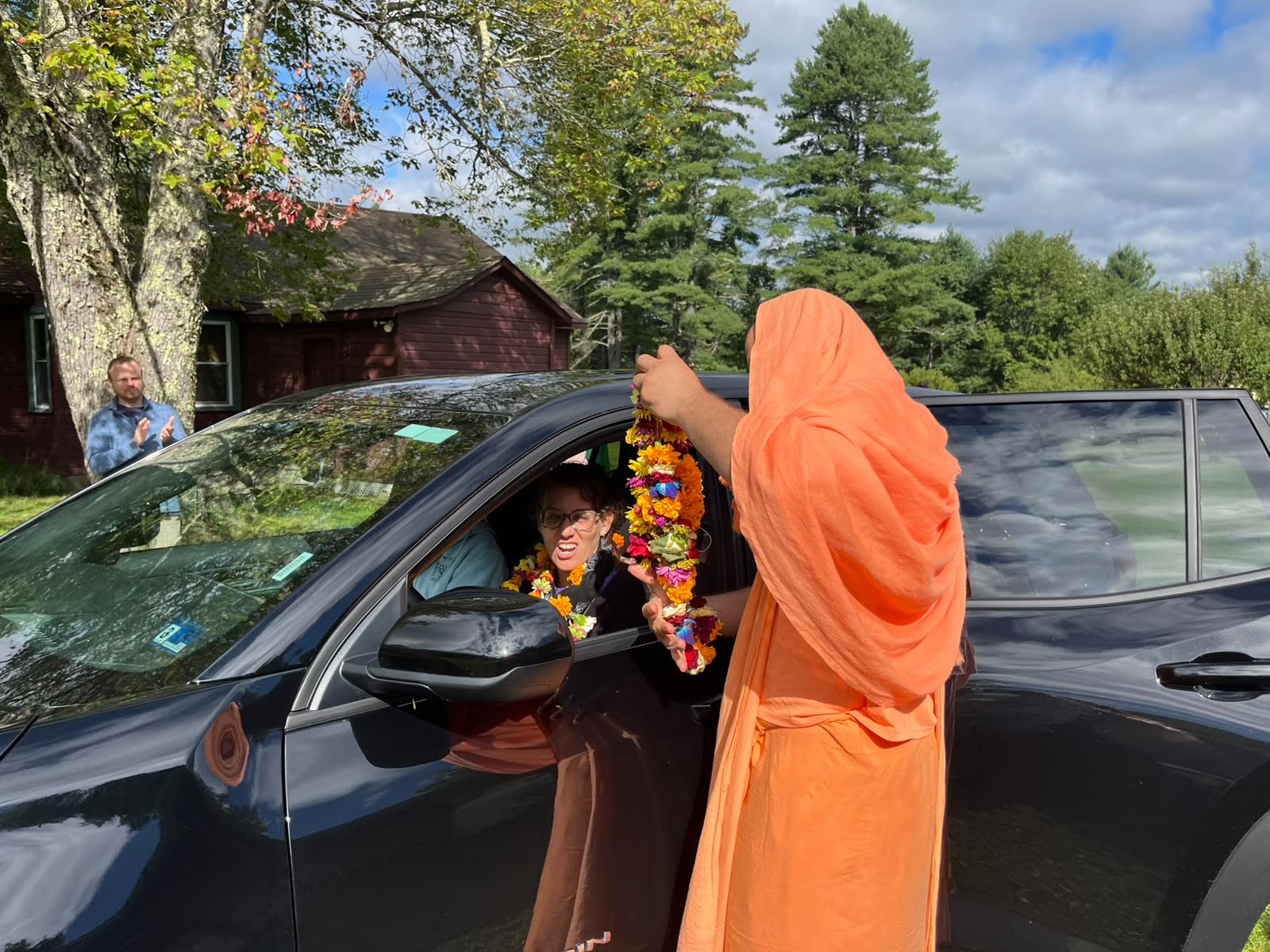

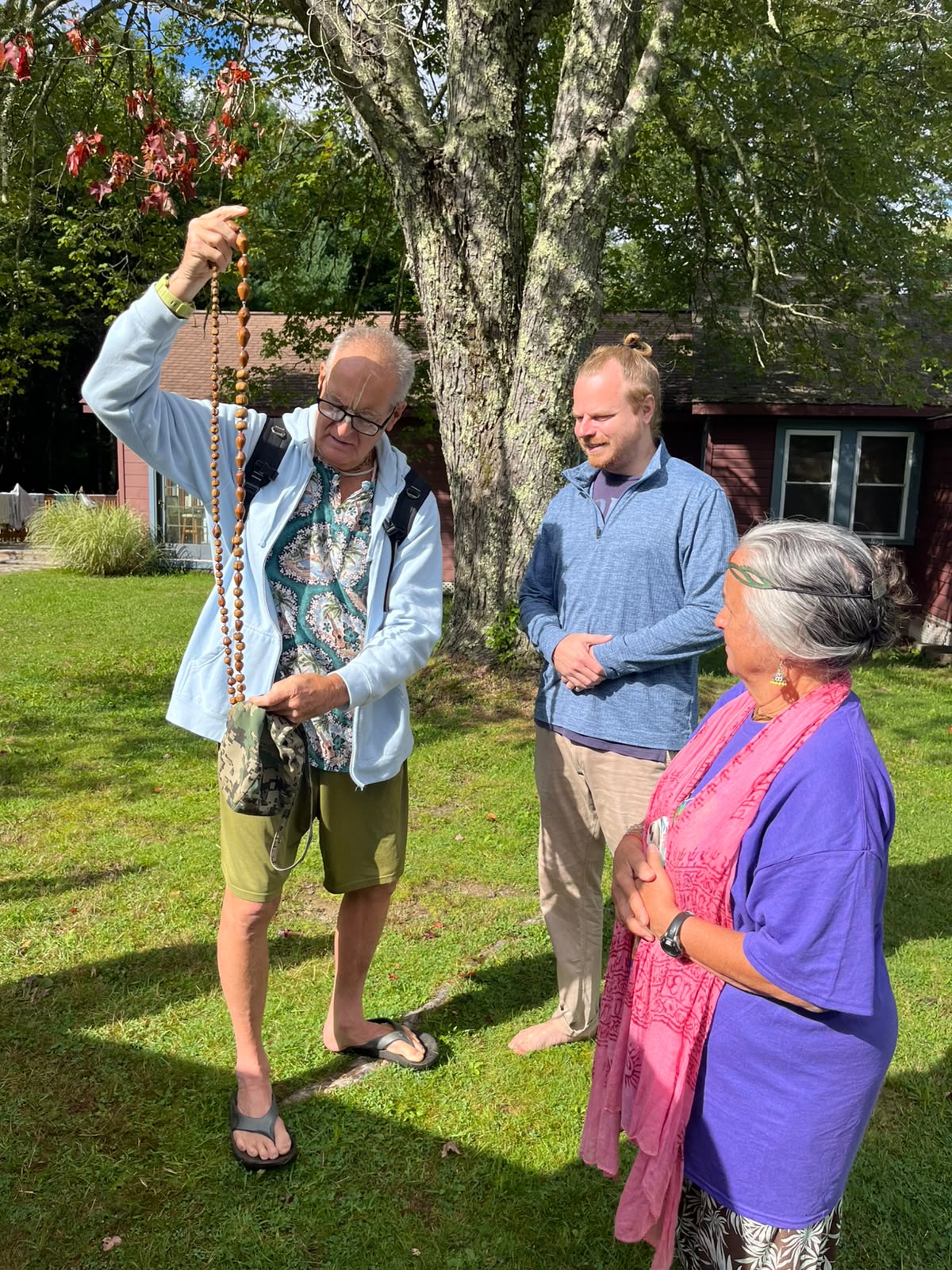 Saying goodbye—especially to Mahārāja—was more difficult than I had expected. In such a short time, we had become one large family, united by our love for Gurudeva and Śrī Rādhā and Kṛṣṇa. The tears we shed were tears of gratitude—love received and love awakened.
I returned home to China refreshed, inspired, and filled with gratitude. The festival gave me renewed spiritual strength, deeper devotion, meaningful friendships, and a greater appreciation for sincere spiritual association.
I offer special thanks to Dayanidhi Prabhu from Maui, whose beautiful photographs captured the festival's joy and devotion—allowing us to cherish these memories for years to come.
It was more than a gathering.
It was a meeting of hearts beneath the shelter of devotion—a celebration of love, service, friendship, and grace.
And although we have returned to our homes, a part of us still remains there: beneath the open sky, beside the sacred fire, among the singing devotees, with the holy names rising into the night.
The festival lives within us—a lamp kindled in sacred association, carried home in the heart.
A Living Continuation
Our gathering at Bhakta Bandhav Ashram was not merely a namesake event—it was a living continuation of that original spirit. Devotees from diverse cultures and traditions came together as one family, united by the holy names. The Serve Love mission was visible in every act: Mahārāja personally serving prasādam, devotees cooking joyfully for hours, and everyone—young and old—offering their talents in music, drama, and care. We experienced what the original festival offered centuries ago: a meeting of hearts rooted in humility, gratitude, and unwavering devotion to Śrī Rādhā and Kṛṣṇa.