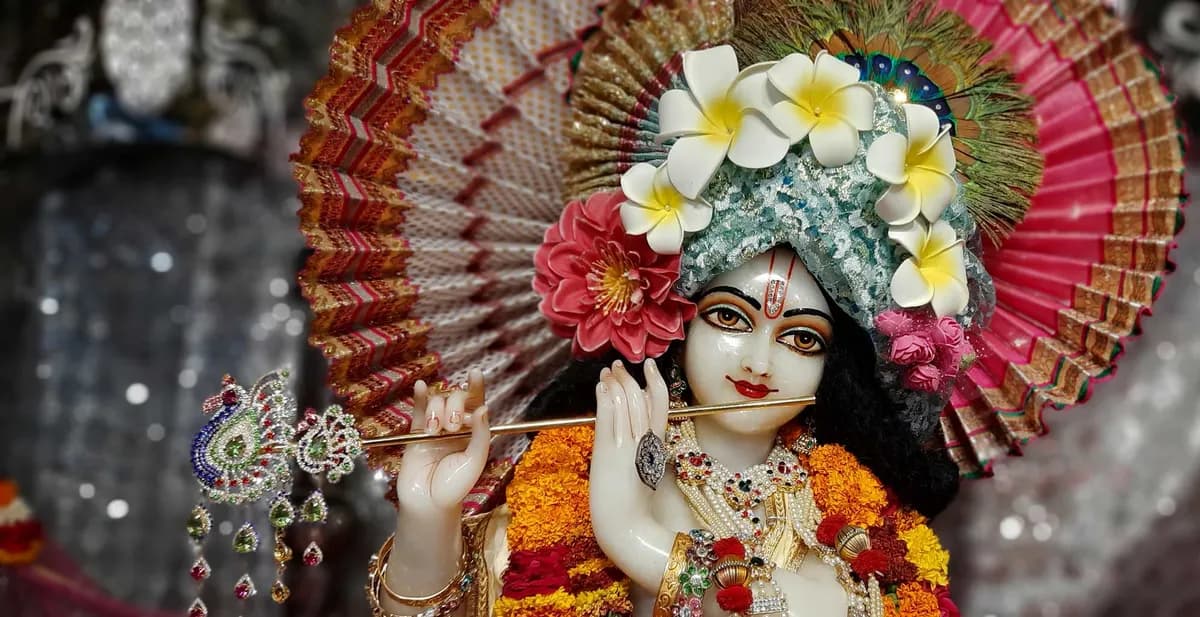
The late afternoon pastimes (aparāhna-līlā) are described in Govinda-līlāmṛta (19.1):
śrī-rādhāṁ prāpta-gehāṁ nija-ramaṇa-kṛte kḷpta-nānopahārāṁ
susnātāṁ ramya-veśāṁ priya-mukha-kamalāloka-pūrṇa pramodām
śrī-kṛṣṇaṁ cāparāhne vrajam anucalitaṁ dhenu-vṛndair-vayasyaiḥ
śrī-rādhāloka-tṛptaṁ pitṛ-mukha-militaṁ mātṛ-mṛṣtaṁ smarāmi
In the afternoon, after madhyāhna-līlā, Śrī Rādhā goes to Her home, bathes and gets dressed and decorated. On the affectionate order of Śrī Yaśomatī, She prepares a variety of preparations, including karpūra-keli and amṛta-keli, for Her prāṇanātha Śrī Kṛṣṇa. As He returns to Vraja from the forest with the cows and sakhās, She beholds His lotus face and becomes f illed with delight. Śrī Kṛṣṇa also becomes fully satisfied by beholding Her. After meeting with Śrī Nanda and the other paternal gopas, He is bathed and dressed by the mature maternal gopīs. I contemplate this Śrī Rādhā-Kṛṣṇa.
śrī-rādhikā-gṛhe gelā, kṛṣṇa lāgi’ viracilā,
nānā-vidha-khādya-upahāra
snāta ramya-veśa dhari’, priya-mukhekṣaṇa kari’,
pūrṇānanda pāila apāra
śrī-kṛṣṇāparāhna-kāle, dhenu-mitra laiyā cale,
pathe rādhā-mukha nirakhiyā
nandādi milana kari’, yaśodā-mārjita hari,
smara mana ānandita haiyā
The various pastimes of Śrī Rādhā-Kṛṣṇa during midday (madhyāhna), such as water sports (jala-krīḍā), playing dice (pāśā-khelā), swinging (dola-līlā), and laughing and joking (hāsa-parihāsa-līlās), are now completed. In the house of Nanda, Śrī Svāminī is not able to feed Her priyatama with Her own hands, but at midday, Her desire to serve in this way is fulfilled. Kṛṣṇa goes to the forest with His sakhās to herd the cows, and on the pretext of beholding the beauty of the forest, He slips away from His sakhās to go to Svāminī. Text 20 described Kṛṣṇa’s condition when He sees Svāminī’s charmingly attractive lotus face. After madhyāhna-līlā, Śrī Rādhā and Her sakhīs return to Her home in Jāvaṭa, and Śyāmasundara, along with His cows, calves and sakhās, also returns from the forest.
In Her home, Śrī Svāminī busily performs various activities with a restless mind, eagerly desiring to meet with Her priyatama.
At the time of Śrī Kṛṣṇa’s return, the sakhās accompanying Him play their horns and other instruments, making a tumultuous sound. The Vrajavāsīs become extremely blissful when they see the dust f lying from the cows’ hooves. The arrival of Śrī Kṛṣṇa is like the arrival of the rainy season. The sky is filled with clouds of dust raised by the cows, the song of the f lute is like a shower of nectar raining from the sky, and the cows’ mooing is like the rumbling of clouds. Like extremely thirsty cātaka birds (who only drink rainwater as it falls), the Vrajavāsīs come forward. When the cowherd boys leave to go cowherding, Kṛṣṇa walks in the front, and when they return, Baladeva Prabhu is at the front.
When Śrī Kṛṣṇa passes through the village of Jāvaṭa, Śrī Rādhā sees Him through the small latticed windows of Her house. Śrī Kṛṣṇa also craves the darśana of His beloved, and sometimes receives it directly when He begs something from Her. Before Priyājī can give Him anything, though, He steals Her heart like a dextrous thief. But my Svāminī is no less. She also steals the heart of Her priyatama. Now each acts with the heart and mind of the other. Śrīla Jīva Gosvāmī, in his Śrī Yugalāṣṭakam (6), prays:
kṛṣṇa-citta-sthitā rādhā rādhā-citta-sthito hariḥ
jīvane nidhane nityaṁ rādhā-kṛṣṇau gatir mama
Rādhā is always firmly situated within the mind of Kṛṣṇa and Kṛṣṇa is always firmly situated within the mind of Rādhā. May Rādhā and Kṛṣṇa be my shelter in life or death. (Service to that Divine Couple is my only desired object.
Śrī Kṛṣṇa arrives at His home, the house of Nanda. With the end of her sārī, Yaśodā cleans her lālā’s face, which is covered with dust from the cows, performs ārati and then, placing Him on her lap, breast-feeds Him. After some time, Kṛṣṇa goes to milk the cows. Upon His return, Yaśodā bathes Him and very lovingly feeds Him the sweets sent by Śrī Rādhā. Śrī Rādhā’s kiṅkarīs have darśana of all these pastimes and, returning to their Svāminī, who is restless and agitated, relate all these events to Her.
He who chants harināma while contemplating these pastimes will, by Śrī Svāminī’s grace, become eligible to one day serve these pastimes.
[CC-by-NDNC Bhakta Bandhav]
[Excerpts of Śrī Śikṣāṣtakam and Bhajana-rahasya from GVP - CC-by-ND.]