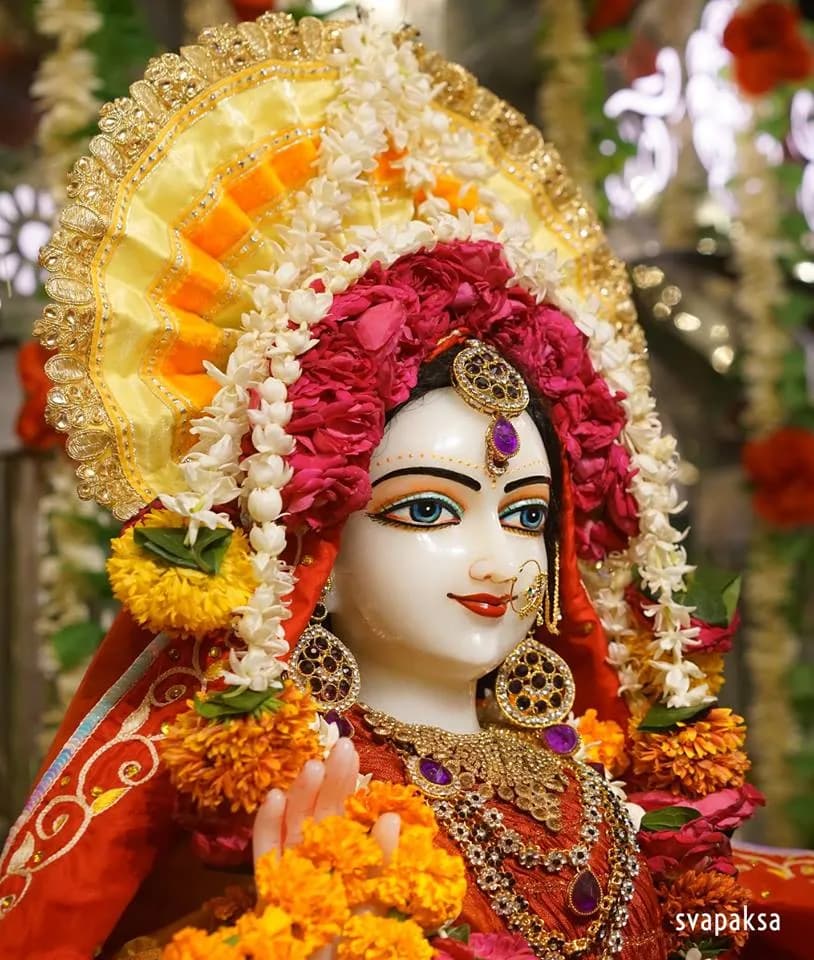
Śrīla Bhaktivinoda Ṭhākura sings:
śuno, he rasika jana, kṛṣṇa-guṇa agaṇana, ananta kahite nāhi pāre kṛṣṇa jagatera guru, kṛṣṇa vāñchā-kalpa-taru, nāvika se bhava-pārābāre hṛdaya pīḍita jā’ra, kṛṣṇa cikitsaka tā’ra, bhava-roga nāśite catura
Listen to this, O relishers of nectar! Śrī Kṛṣṇa’s transcendental qualities are innumerable; indeed it is not possible to describe all of His unlimited attributes. Kṛṣṇa is the spiritual master of the entire universe, He is a wish-fulfilling desire-tree, and He is the helmsman of the boat navigating the ocean of material existence. Kṛṣṇa is the doctor for those whose hearts are ailing, as He is very expert at destroying the diseased condition of material existence.
How wonderful is Kṛṣṇa? The pain of any disease and the most fearsome problems will vanish from our lives if we just pray sincerely to Him. He steals our worries and illnesses, purifies our being, and makes us well.
He does not reject anyone. When Narakāsura captured the princesses and imprisoned them in his fortress, he told them, “I will give you one year. If you agree to marry within that time, you are safe. If you refuse, I will make chutney out of you and feed you to my dogs.”
In their prison, the princesses prayed to Kṛṣṇa day and night to come and save them. Ultimately, Kṛṣṇa came, killed Narakāsura, and freed the girls. When they saw Kṛṣṇa, they prayed, “We are now unacceptable in society. Please be merciful and make us maidservants in your home. We will serve Dvārakā, sweeping the streets, and doing any small service.”
“You have completely offered yourselves to Me,” Kṛṣṇa said. “How can I reject you? I know you are faultless. If even those who are full of unwanted qualities offer themselves to me, it is my duty to help them.
Knowing that they are only covered by dirt and darkness, I clean them, reveal their true brightness, and keep them near me.”
People don’t know how to clean and purify themselves. This is not possible for them. But they are expert in collecting bad things. They know very well how to collect anarthas. All run that way, due to their bad habits. But who knows how to clean themselves, ceto darpaṇa mārjanam?
To surrender means:
sarva-dharmān parityajya mām ekaṁ śaraṇaṁ vraja ahaṁ tvāṁ sarva-pāpebhyo mokṣayiṣyāmi mā śucaḥ
Bhagavad-gītā 18.66
Completely abandoning all bodily and mental dharma, fully surrender to Me alone. I shall liberate you from all reactions to your sins. Do not grieve.
Kṛṣṇa says, “Taking shelter means that you give yourself to Me and promise not to leave Me. If anyone
does this, then I immediately accept him. I protect that person, keeping him in an area where bad association is prohibited to enter and cause mischief.”
Kṛṣṇa said to the newly freed girls, “I will not make you household servants. I will make you My dear queens.” My body and heart are always disturbed. They do not like bhakti or bhajana. They do not desire God’s service or a relation with God’s family. I request them again and again to please come to the temple to serve God and His devotees. But they fight. They refuse to agree to this but easily agree to any chance for bad actions. In a second, they would agree to drink coffee, but they do not like to take caraṇāmṛta. They will not bathe in holy rivers but are very happy to bathe in drains. In their consideration, love and affection for a dog is desirable, while they harm cows. This is the low-class nature of the materially conditioned souls.
I am defeated by these senses of mine, and because of this I am pained. Not only do the joints and other parts of my body feel pain, but I am hopeless. My heart is now weak.
Prabhu, Your sweet face is like the rising moon, and the moon’s rays are known to cool all beings. Please steal the heat that burns me. Remove my anārthas. Accept me, O Master. I will look to no one else but You. There is no way to put an end to what tortures me other than You. Also, so many different kinds of heats are burning me. I try to give everything up, renouncing and becoming free, but it is not possible for me. I cannot get liberation from all this.
yāvan na me nara-daśā daśamī kuto ‘pi randhrād upaiti timirī-kṛta-sarva-bhāvā lāvaṇya-keli-sadanaṁ tava tāvad eva lakṣyāsam utkvaṇita-veṇu mukhendu-bimbam
Kṛṣṇa-karṇāmṛta 38
Till the tenth stage of man (death) comes upon me through some physical defect, enveloping me in total darkness, let me ever see the orb of Your moon-face, which is the abode of both the pastimes of beauty and Your high-sounding flute.
From birth to one’s final day, one passes through ten stages. From ou mother’s womb we received a physical structure which weighs around three kilograms and is called a body. Collecting many kinds of minerals and other material things this body grows larger. Then this body has many desires, and I am forced to follow many processes to fulfill them.
The body strives to be strong, young, healthy, and ready for all types of enjoyment. But the senses plunge us into darkness from which we cannot escape. We now have a relationship with the body. Although it is the cause of our torment, we are still attached to it. We want to be free, but find it impossible. Soon we will leave this body, and there is no guarantee where we will go. In our dark prison we sometimes become senseless and mad. We are devoid of strength.
We should pray, “Prabhu, please help me! O You who play in Vṛndāvana. You who emanate nectar as the song of Your flute. Please send me just one drop of that nectar—this will be my life and soul. Remembering Your sweetness, I will distribute Your glories everywhere. This is my request to You. Please send Your message of nectar to me. I am eager for sat-saṅga, hari-kathā, hari-kīrtana, and navadhā-bhakti, but they are unreachable for me without Your help. Please give me a connection to Your divine pastimes. Your līlās with the Vrajavāsīs are eternal. I desire to drink that līlā-rasa forever. Do not give me anything else. Nothing but this can give me permanent help.”
Many people only pray to God about their own negative and sinful state, hoping for His grace to fall upon them. They don’t sing about Kṛṣṇa’s nāma, rūpa, guṇa, and līlā. They pray like this because of their disturbance in material life. But Bilvamaṅgala Ṭhākura prays and remembers Kṛṣṇa’s nāma, rūpa, guṇa, and līlā. Other kinds of prayers are not that beneficial.
Any kirtana that is filled with Kṛṣṇa’s sweet nāma, rūpa, guṇa, and līlā is extremely helpful for everyone. But the jīvas have too many anarthas and too much false ego to be able to appreciate those kīrtanas. They say they are not qualified. But what is the meaning of adhikāra? Just try to absorb yourself in Kṛṣṇa’s nāma, rūpa, guṇa, and līlā.
Praying at the time of suffering is alright, but is it for Kṛṣṇa’s happiness or one’s own happiness? There are many prayers for beseeching the Lord and sometimes in a mood of great despondency—moods like these are expressed by the devotee. This is called akṣepa. “How can I give up these bad qualities? O Prabhu, I do not know. Please help me.” Prayers filled with Kṛṣṇa’s nectarful līlās with His eternal companions cause His delight and are helpful for everyone at any time and in any situation. Bilvamaṅgala Ṭhākura says, “I relish those pastimes.”
ālola-locana-vilokita-keli-dhārā- nīrājitāgra-caranaiḥ karuṇāmburāśeḥ ārdrāṇi veṇu-ninadaiḥ pratināda-pūrair ākarṇa-yāmi maṇi-nūpura-siṣjitāni
Kṛṣṇa karnamrta 39
My ear catches the tinkling of the bejewelsed anklets of Kṛṣṇa, the ocean of mercy. That tinkling is sweetened by His effulgent feet, which are receiving waves of playful glances from His rolling eyes, and by the flooding resonances of His flute-song.
Vraja-maṇḍala is covered with Kṛṣṇa’s footprints. When the Vrajavāsīs touch the dust of those footprints, Kṛṣṇa’s pastimes manifest in their hearts, one after the other.
Following the cows, Kṛṣṇa wanders throughout Vraja-maṇḍala’s groves and kuñja-kuṭīras and Govardhana’s peaks and caves. The different moods that Kṛṣṇa feels as he goes from place to place remain present in His footprints. Pṛthivī-devī bears these footprints on her body and keeps these moods close to her heart. If a sādhaka faithfully touches Kṛṣṇa’s footprints, and absorbs his mind in Him, then all those eternal pastimes will come into his heart, awarding him a chance for a connection in Rādhā-Kṛṣṇa’s service.
That sādhaka will be endowed with all kinds of good qualities. His heart will be soft and sweet, and he will be pure externally and mentally. He will always desire to hear Kṛṣṇa’s flute-playing and will have no interest to hear anything else.
Kṛṣṇa is karuṇā-sāgara, the ocean of kindness. He plays His flute in Vraja-maṇḍala, and the sound reverberates from one to another and from them to others. If someone hears and drinks this message of Kṛṣṇa, distributed by the song of His flute, then that person will come to the path that is set by Kṛṣṇa’s transcendental footprints. At that point, he will be unable to divert from that path, even if he desired to. He will have spiritual willpower. If he desires to stray from the path, his feet will instruct him, “No! Do not go that way. Go this way.”
he deva he dayita he bhuvanaika-bandho he kṛṣṇa he capala he karuṇaika-sindho he nātha he ramaṇa he nayanābhirāma hā hā kadā nu bhavitāsi padaṁ dṛśor me
Kṛṣṇa-karṇāmṛta 40
O only friend of the universe! O Kṛṣṇa, O restless one, O only ocean of mercy! O my Lord, O my enjoyer, O beloved to my eyes! Alas, when will You again be visible to me? “O Deva, You are always happy and in a playful mood. You call and invite everyone nearby, and anyone who comes, You play with them and make them very happy. You know all kinds of play. You are deva. You are the power and beauty of the demigods. You give the devatas potency and energy. O Dayitā, I am requesting You, I want You to be near and dear to me. Please accept me as a member of Your eternal playful pastimes—Not just for a minute or one day, but for eternity. O Bhuvanaika-bandhu, You are the best friend of everyone.
“O Capala Kṛṣṇa, You are very restless. You are an ocean of kindness. Your mercy is great. Once received, Your kindness will never leave or dwindle. Your kindness is unlimited and infinite. O Nātha! You are not only Gopinātha or Vrajanātha, You are Jagannātha—the Nātha of everyone in the universe, the beloved of all, not only of the gopīs and Vrajavāsīs. If anyone is distant from Vraja-maṇḍala and the gopīs or Vrajavāsīs, will you not help them? I know you help everyone, therefore you are everyone’s Nātha. O Nayanābhirāma, my eyes collect many things that are not helpful for myself or for anyone. Now I wish to collect Your svarūpa only. Otherwise, my eyes will simply look here and there, wondering who is my enemy and who is my friend. If someone is against me, I try to burn them with my eyes. But You are Nayanābhirāma, You can cool my eyes. Vision of You will be the satisfaction of my eyes. When will You permanently manifest before my eyes, so that I can always see You?
“O Deva, I am not requesting You to make me qualified. You are Supreme and transcendental. Without consideration, You bless the souls who come to You with all good qualities. But how can I come near You? I have so many anarthas.
“You are Deva, You have supreme attraction power. I play in the mundane world. You know my nature. Therefore, O Dayitā, Beloved, You are my only friend. You are causelessly merciful. You bestow goodness and good qualities. Everything You do is very sweet. First You send a messenger with Your holy name. Then Your rūpa, guṇa, and līlās manifest successively. By this process, You attract the jīvas and bring them nearby, for You are jagat-bandhu, the best friend of everyone. O Cāpala, restless one, You cannot stay in the heart of just one ṛṣi or muni. You go to everyone, but are especially drawn to thosewho are also restless.”
nāmaikaṁ yasya vāci smaraṇa-patha-gataṁ śrotra-mūlaṁ gataṁ vā śuddhaṁ vāśuddha-varṇaṁ vyavahita-rahitaṁ tārayaty eva satyam tac ced deha-draviṇa-janatā-lobha-pāṣaṇḍa-madhye nikṣiptaṁ syān na phala-janakaṁ śīghram evātra vipra
Hari-bhakti-vilāsa 11.289
If a devotee once utters the holy name of the Lord— or if it penetrates his mind or enters his ear, which is the channel of aural reception—that holy name will certainly deliver him from material bondage, whether vibrated properly or improperly, with correct or incorrect grammar, properly joined or vibrated in separate parts. O Brāhmaṇa, the potency of the holy name is therefore certainly great. However, if one utters the vibration of śrī nāma for the benefit of the material body, for material wealth and followers, or under the influence of greed or atheism—in other words, if one utters the name with offenses—such chanting will not produce the desired result very soon. Therefore, one should diligently avoid offenses in chanting harināma.
Kṛṣṇa-nāma is for everyone. Every lady, gent, old person, blind person, or even sinful offender can chant kṛṣṇa-nāma. Then Kṛṣṇa becomes their good friend and delivers them from any fearsome condition. There are no rules regarding cleanliness, volume or anything pertaining to time and place. Simply by chanting kṛṣṇa-nāma, a person’s friendship with Kṛṣṇa begins. Then, as that person continues to chant, Kṛṣṇa comes and shows His svarūpa.
Many times, Śrīla Gurudeva told this story as an example:
Once there was a small boy who daily had to walk six or seven kilometres to get to school. His path was through a deep forest, and sometimes the boy was frightened as he walked. One day he went to his mother and said, “How can I cross this jungle every day? It is so dark, and there are many wild animals.”
“Don’t worry,” his mother said. “Don’t think you are alone. Gopāla is the friend of everyone, and if you are ever afraid, you can chant His name and He will come to you. He is a small boy like you. He is very helpful and sweet.”
As the boy was walking through the forest the next day, he was suddenly startled by the sudden roar of alion. He remembered his mother’s words and called out, “Gopāla! Kṛṣṇa! Gopāla! Kṛṣṇa!” His call was heartfelt and sweet, and as soon as he said these names, he felt fearless. He went to school and back that day without any more disturbance.
From that day on, whenever he was scared, he called for Kṛṣṇa and became completely fearless. His mother asked, “Do you have any problems now?”
“No, I call Gopāla Kṛṣṇa and become strong. But what kind of a friend is He? He still has not given me darśana.”
“I assure you, He is your good friend. He will definitely come and give you darśana. Don’t worry.”
One day, after school, there was a big storm. Everywhere it was dark, windy, and water flooded the forest path, making it impossible for the boy to reach his home. “Gopāla Kṛṣṇa!” he prayed, “O my dear brother, come and help me. How will I be able to go to my house?”
Suddenly before his eyes came a small boy of around his same age. The boy took his hand and led him home. When the boy arrived home, his mother asked him, “How were you able to come in a storm like this?”
“You told me that Gopāla is my good friend. I called Him, and He came to help me.”
His mother smiled. “One day you must bring your friend here and show Him to me. Invite Him to our house.”
“What a good idea! I will invite him home today.” The boy went out and called for Gopal, who came before him. The boy brought him home and announced joyfully to his mother, “Mother, my friend is here. I have brought him.”
“I can’t see him,” she said.
“You can’t see Him? Do your eyes not work?”
“I see you, but not Gopāla. Where is He? What does He look like?”
“Mother, I am holding His hand. Just touch Him.”
She told her son to remember and have faith in Gopāla, but she herself had no faith. Therefore, Kṛṣṇa’s darśana was not possible for her. But her son had a clean heart and pure faith. Because of this, Kṛṣṇa gave him darśana and personally interacted with him. We are very clever. We hide our many anarthas with a show of mundane knowledge. But, really, what qualities do we have? We are filled with only darkness, ignorance, and false ego. This is all we collect from this world, and it is why we doubt the truth and live in misery. We chant kṛṣṇa-nāma, but without relation. We do not believe in the power of harināma.
Kṛṣṇa says, “I first manifest to the jīvas as My names, then I reveal My form, and then My qualities. Not only do I reveal My qualities to them, but I also decorate them with good qualities. After this, I reveal My līlā and give them a chance to enter My playful pastimes.”
“O Deva, O Dayita, make me light and bright, for I am engulfed by darkness. I have fallen into a deep and dark well. Please take me out and give me light, so I can see the path to reach You.
“O Nātha, You are Rādhānātha and Gopinātha, You are Nayanābhirāma and You are Jagannātha. You are Karuṇaika-sindhu, the ocean of kindness. O Prabhu, please give me one drop of mercy.”
amūny adhanyāni dināntarāṇi hare tvad-ālokanam antareṇa anātha-bandho karuṇaika-sindho hā hanta hā hanta kathaṁ nayami
Kṛṣṇa-karṇāmṛta 41
O my Lord, O Supreme Personality, O friend of the helpless! You are the only ocean of mercy! Because I have not met You, my inauspicious days and nights have become unbearable. I do not know how I shall pass the time. “
O Anātha-bandhu, You are the only friend of the destitute. You are the helper of everyone. Day and night I simply run here and there collecting duṣkṛti—sin, offenses, and anarthas. This is all I have. Now I suffer. I have no knowledge of what is good for me. I am the helpless slave of my mind and senses. They drag me everywhere for the sake of their satisfaction. My situation is just like when a baby ignorantly catches hold of a snake and chews on it. The snake immediately bites that baby and drinks its blood. Similarly, māyā looked very nice and shiny, and I ran to catch her, but instead I became caught in her trap. ‘Stay with me,’ she says, ‘do not leave me.’ But then she drinks my blood, and by the effect of her poison, I somehow think that I am happy and well.
“My incessant collecting of anarthas and my determination to waste time have made my heart hard like a rock. Due to asat-sāṅga, I have no softness and am very cruel. I have no desire to come near my real family—the family of God. Instead, I serve the relatives related to me only by blood. They do not help me. They are destroying me. I cannot find the strength to escape them. I came to this world alone and I will go alone, but in the midway I am arrested by these people. I am always ready to serve them, thinking I am doing right, but in actuality they are robbing me of everything I have. This is all so painful.”
Bilvamaṅgala Ṭhākura prays, “I am now an orphan, Prabhu. O Karuṇā-sindhu, alas! I am lost. I know this, but I still cannot leave all this even in my last moments. How have they made this relation with me? They have stolen me. I can’t give them up. I don’t know the process.
“I have no helper, I have no place. I have not taken shelter of anyone. No one tells me, ‘You are mine.’ No one has accepted me. This means that all come and take things from me and leave. No one thinks of my future. Where did I come from, where am I going, and why am I here? No one explains any of this to me. Like a bull who works hard day and night, when he has no more strength to work, they beat and kill him. I took birth and am here. Everyone uses me for their own purposes, but no one is helping me or thinks about me. O Kṛṣṇa, now I understand the truth. You are the only helper of all living entities. I don’t know how I can take shelter of You. You are karuṇā-sindhu, the ocean of mercy. Help me by Your infinite kindness. Where can I go to drink Your nectar? How can I follow You? O Kṛṣṇa, I am praying to You.”
Excerpted from the Bhakta Bandhav “Nectar of the All Attractive”, Chapter 9 [CC-by-NDNC Bhakta Bandhav]