Texts 2–3
śrī rādhikāra sakhī jata tāhā vā kahiba kata mūkhya sakhī kariye gaṇana lalitā viśākhā tathā sūcitrā campakalatā raṅgadevī sūdevī kathana tūṅgavidyā indūlekhā ei aṣṭa-sakhī lekhā ebe kahi narma–sakhī gaṇa ihoṅ sevā saha carī priya-preṣṭha nāma dhari prema sevā kare anūkṣaṇa
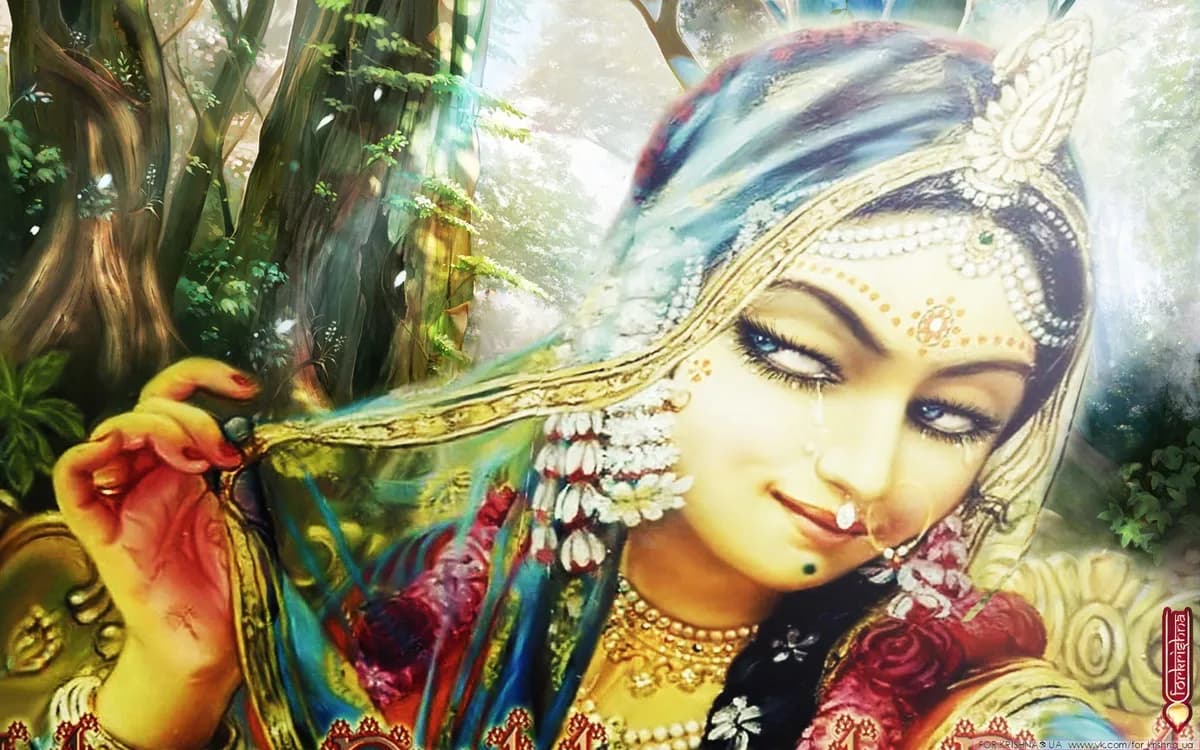
Who can count the innumerable different types of sakhīs of Śrīmatī Rādhikā? Therefore, I will only describe the main ones. Lalitā, Viśākā, Sūcitrā, Campakalatā, Raṅgadevī, Sudevī, Tuṅgavidyā, Indūlekhā are the aṣṭa-sakhīs, the eight principle sakhīs. They are the dear most friends of Śrīmatī Rādhikā and are constantly performing service with heartfelt love. They are known as the parama-preṣṭha-sakhīs, those who are the topmost friends of Rādhā-Kṛṣṇa.
Śrīla Kṛṣṇadāsa Kavirāja Gosvāmī has written in Caitanya-caritāmṛta ( Ādi-līlā 4.138–139):
adbhuta, ananta, pūrṇa mora madhurimā tri-jagate ihāra keha nāhi pāya sīmā ei prema-dvāre nitya rādhikā ekali āmāra mādhuryāmṛta āsvāde sakali
My sweetness is astonishing, infinite, and complete. No one in the three worlds can reach its limit. Only Rādhikā, by Her love, is able to taste all the nectar of My sweetness.
Apart from Śrīmatī Rādhikā, no one can fully serve and taste the nectar of Kṛṣna’s sweetness. Therefore, the aṣṭa-sakhīs are always happily assisting Rādhikā in Her service to Kṛṣṇa, even though in their own right they are qualified to be group leaders.
In these two verses, Śrīla Narottama dāsa Ṭhākura describes the eight most important gopī friends of Śrīmatī Rādhārānī: Lalitā, Viśākā, Sūcitrā, Champakalatā, Raṅgadevī, Sudevī, Tuṅgavidyā, and Indūlekhā. Śrīmatī’s other friends are divided into other groups. All these gopīs constantly render loving service to Śrīmatī Rādhārānī.
By remembering Rādhārānī’s near and dear priya-narma-sakhīs, a sādhaka will be able to cultivate anurāga. Thus, you should always remember Lalitā, Viśākā, Sūcitrā, Campakalatā, Raṅgadevī, Sudevī, Tuṅgavidyā, and Indūlekhā. They are the most prominent priya-narma-sakhīs of Śrīmatī Rādhārānī.
When you chant Hare Kṛṣṇa, you must not think that Hare only means Śrīmatī Rādhārānī. Mahāprabhu has said:
harer nāma harer nāma harer nāmaiva kevalam kalau nāsty eva nāsty eva nāsty eva gatir anyathā
Bṛhan-nāradīya Purāṇa
Śrīmatī Rādhikā is not alone. She is present with all Her sakhīs. And Kṛṣṇa, also, is not alone, just like a king is never alone. A king has his country, citizens, neighbouring kingdoms, ministers, and others—he always has a mighty entourage. Kṛṣṇa is all-attractive. He has His priya-sakhās and priya-narma-sakhās. So when you chant Hare Kṛṣṇa, you should remember all the residents of Vraja-maṇḍala, especially the priya-narma-sakhīs and sakhās. You should remember Vraja-bhūmi and the Vraja-devīs.
Śrīla Kṛṣṇadāsa Kavirāja Gosvāmī has explained rāgānugā-bhajana in Caitanya-caritāmṛta (8.219–222).
sei gopi-bhāvāmṛte yāṅra lobha haya veda-dharma-loka tyaji’ se kṛṣṇke bhajaya rāgānuga-mārge tāṅre bhaje yei jana sei jana pāya vraje vrajendra-nandana vraja-lokera kona bhāva lañā yei bhaje bhāva-yogya deha pāñā kṛṣṇa pāya vraje tāhāte dṛṣṭānta—upaniṣad śruti-gaṇa rāga-mārge bhaji’ pāila vrajendra-nandana
One who has developed greed for the nectar of gopī-bhāva abandons all Veda-dharma and begins to perform exclusive bhajana of Śrī Kṛṣṇa. Those who worship Him on the path of rāgānuga-bhakti, or spontaneous devotional service, attain Vrajendra-nandana Śrī Kṛṣṇa. Whoever accepts one of the moods of the eternal associates of Vraja and performs bhajana, following their mood of service, will attain an appropriate spiritual body (siddha-deha) and service of Śrī Kṛṣṇa in Vraja. The Upaniṣads and the Śrutis bear witness to those who achieved the service of Vrajendra-nandana by performing bhajana on the rāga-mārga.
Don’t think that this physical body is everything. The body is only a uniform, structure, or figure. However, our eternal svarūpa is not like a dry, lifeless straw. The soul has her own svarūpa. By following in the footsteps of the Vraja-devīs and by serving Kṛṣṇa under their guidance, the sādhaka will achieve prema-bhakti. But the sādhaka will lose everything if he desires respect, name, opulence, or anything mundane.
Bhajilo nahi pāya vrajendra-nandane: you may independently do so much bhajana, but Vrajendra-nandana will not appear to you. Without the guidance of the gopīs, you may put on many ostentatious displays, but they will be of no avail. The gopīs only like flowers and other simple things. They like beli, camali, jūhī, mallika, mālatī, and other small flowers. They don’t want Rādhārānī to have to carry heavy flowers. The gopīs make such fragrant flower garlands for Kṛṣṇa. Gopīs only like kuñja-kutīras and gardens. Everything is useless if you are doing bhajana with aiśvarya-jñāna.
kasyānubhāvo ‘sya na deva vidmahe tavāṅghri-reṇu-sparaśādhikāraḥ yad-vānchayā śrīr lalanācarat tapo vihāya kāmān su-ciraṁ dhṛta-vratā
Śrīmad-Bhāgavatam 10.16.36
The wives of Kāliya prayed to Śrī Kṛṣṇa: O Lord, we cannot estimate the pious activities our husband must have performed in his previous life to become qualified to receive the touch of the dust of Your lotus feet. This dust is so difficult to achieve that even Lakṣmī Herself, giving up everything, has been performing austerities for a very long time, trying to attain those very feet.
Mahā-Lakṣmī appeared with all her opulence and thought, “I will give everything to Kṛṣṇa. He will be happy and pleased by these presentations of diamonds and gold.” But Kṛṣṇa was not happy with such offerings. He only likes the green grass, fruits, and flowers of Vṛndāvana. He doesn’t like opulence. A turban, cloth, and a flute is all He needs. The four moods of Vraja are dāsya-, sakhya-, vātsalya-, and mādhurya-bhāva.
A sādhaka may think, “I will follow in the footsteps of Raktaka and Patraka. I will always be under the guidance of these servants of Vraja. I will follow every instruction they give.” Someone else may desire the sakhya-bhāva of Subala and Śrīdhāma, and yet another sādhaka may want the vātsalya-bhāva of Nanda and Yaśoda. Still another sādhaka may desire to do bhajana under the guidance of Śrīmatī Rādhārānī, Lalitā, and Viśākhā. Caitanya Mahāprabhu and our Guru-varga have stated how mañjarī-bhāva is especially wonderful. It is the most helpful in Kali-yuga. By aspiring for rādhā-dāsyaṁ (servitude of Śrīmatī Rādhārānī) Rādhārānī will draw the devotee towards Her service, after the devotee achieves svarūpa-siddhi.
Śrī Guru tells the devotees to do different services, including cooking, cleaning, pūjārī-sevā, gardening, caring for the cows, publishing, management, and so forth. Is this Śrī Guru’s own choice? No. Śrī Guru knows everyone’s svarūpa. He knows the sādhaka’s nature. Therefore, Gurudeva gives instructions accordingly. But those who are unfortunate will not pay heed to his words.
Similarly, Rādhārānī will also give such instructions to Her maidservants. Her followers know which service suits the sādhaka the most. Otherwise, the sādhaka will lose much time wandering about. The sādhaka will be misguided, disturbed, and unhappy. Svarūpa-śakti Rādhārānī will divide the sādhakas and tell them whether they belong to dāsya, sakhya, vātsalya, or mādhurya-rasa. Even mādhurya-rasa has many groups. Rādhārānī gives such svarūpa-gata-sevā. Svarūpa-siddhi will quickly be attained by the mercy of Śrīmatī Rādhārānī. Our ācāryas have said: tasya svarūpa-gata śuddha-cid-deham adhikāra bhedena madhura-rasāsvādanā yatanaṁ gopikā deham api prakaṭayati. After ignorance is dispelled, and the jīva’s gross and subtle coverings are both destroyed, at once the jīva’s pure, constitutional, transcendental body appears. Those who are eligible to taste madhura-rasa attain the pure spiritual body of a gopī.
There are five types of sakhīs: sakhīs, nitya-sakhīs, prāṇa-sakhīs, priya-sakhīs, and priya-narma-sakhīs.
Our Guru-varga has explained that the guidance of the Vraja-devīs is most necessary, but what will I do when I don’t know anything about these sakhīs?
Cit-śakti has been classified into taṭastha-śakti (the marginal potency), bahiraṅga-śakti (the external potency), and antaraṅga-śakti (the internal potency). You cannot do bhajana by taking shelter of māyā or of other conditioned souls. Your bhajana will only start when you take shelter of cit-śakti. Vṛṣabhānu-nandini Śrī Rādhā is the origin of this cit-śakti. She is Mahābhāva-svarūpini. Our Guru-varga has explained the tattva of hladinī-śakti Śrīmatī Rādhārānī this way, but we think we can do anything and that it will be bhajana. We think that serving māyā or the jīvas is bhajana. Bhajana means to serve hladinī-śakti Śrīmatī Rādhārānī.
kṛṣṇera ananta-śakti, tāte tina—pradhāna ‘cit-chakti’, ‘māyā-śakti’, ‘jīva-śakti’-nāma ‘antaraṅgā’, ‘bahiraṅgā’, ‘taṭasthā’ kahi yare antaraṅgā ‘svarūpa-śakti’—sabāra upare sac-cid-ānanda-maya kṛṣṇera svarūpa ataeva svarūpa-śakti haya tina rūpa ānandāṁśe ‘hlādinī’, sad-aṁśe ‘sandhinī’ cid-aṁśe ‘samvit’, yāre jñāna kari’ māni kṛṣṇake āhlāde, tā’te nāma—‘hlādinī’ sei śakti-dvāre sukha āsvāde āpani sukha-rūpa kṛṣṇa kare sukha āsvādana bhakta-gaṇe sukha dite ‘hlādinī’—kāraṇa hlādinīra sāra aṁśa, tāra ‘prema’ nāma ānanda-cinmaya-rasa premera ākhyāna premera parama-sāra ‘mahābhāva’ jāni sei mahābhāva-rūpā rādhā-ṭhākurāṇī premera ‘svarūpa-deha’—prema-vibhāvita kṛṣṇera preyasī-śreṣṭhā jagate vidita sei mahābhāva haya ‘cintāmaṇi-sāra’ kṛṣṇa-vānchā pūrṇa kare ei kārya tāṅra ‘mahābhāva-cintāmaṇi’ rādhāra svarūpa lalitādi sakhī—tāṅra kāya-vyūha-rūpa
Caitanya-caritāmṛta, Madhya-līlā 8.151–152, 154–155, 157–160, 162, 164–165
Kṛṣṇa has innumerable potencies, but three are prominent—cit-śakti, māyā-śakti, and jīva-śakti. In other words, they are called the internal (antaraṅgā), external (bahiraṅgā), and marginal (taṭastha) potencies. The internal potency, also known as svarūpa-śakti, is the Lord’s personal energy and is superior to all others. Kṛṣṇa’s svarūpa is made of sac-cid-ānanda, and therefore His internal potency has three functions—hlādinī is His aspect of bliss, sandhinī of eternal existence, and samvit of knowledge. Hlādinī gives Kṛṣṇa transcendental pleasure and through the hlādinī-śakti, Kṛṣṇa Himself tastes all spiritual pleasure. Kṛṣṇa relishes all types of happiness although He Himself is comprised of happiness. This hlādinī potency is also the cause of happiness for the devotees. The essence of this hlādinī potency is prema and we can explain prema as ānanda-cinmaya-rasa, transcendental mellow full of pleasure. The topmost essence of prema is called mahā-bhāva, and the form of that mahā-bhāva is Śrīmatī Rādhārānī. The body of Śrīmatī Rādhārānī is made of prema; it is always undergoing transformations of ecstatic love. Out of all of Kṛṣṇa’s beloveds, She is His dear most, and this is known to the world. The mahā-bhāva of Rādhārānī is like the essence of a cintāmaṇi. Her only service is to fulfil all of Kṛṣṇa’s desires. Śrīmatī Rādhārānī’s svarūpa is mahābhāva-cintāmaṇi, and the other gopīs, like Lalitā, Viśākhā, and so on, are Her kāya-vyūha, or bodily expansions.
A Classification of Śrīmatī Rādhārānī’s Sakhīs
Śrīla Narottama dāsa Ṭhākura explains that Śrīmatī Rādhikā Herself divided madhura-rasa into four groups. The four groups are svapakṣa, suhṛt-pakṣa, taṭasthā-pakṣa, and vipakṣa. Although madhura-rasa has been classified into four different groups, these groups are not really different from each other—they are of the same essence. It was only to facilitate the enjoyment of Her beloved that Śrīmatī Rādhārānī divided madhura-rasa into four parts.
The svapakṣa group consists of Lalitā, Viśākhā, and the parama-preṣṭha-sakhīs. The vipakṣa group consists of Candrāvalī, Padma, Śaibya, and others. The suhṛt-pakṣa group consists of Syāmalā and her sakhīs. They are inclined towards Śrīmatī Rādhārānī and are neutral towards Candrāvalī and her group. The taṭasthā-pakṣa-gopīs, headed by Bhadra, are neutral towards Śrīmatī Rādhārānī and inclined towards Candrāvalī and her group. The svapakṣa and vipakṣa groups are especially strong in their resolve. They try as much as they can to have themselves held in high esteem. But still, all the gopīs are the expansions of Vṛṣabhānu-nandinī Śrīmatī Rādhārānī.
By being unfavorable towards Śrīmatī Rādhārānī, Candrāvalī and her sakhīs are always augmenting Śrīmatī’s contrary moods. Lalitā and the sakhīs distribute Śrīmatī’s rasa-mādhurī. To increase the exchange of prema, Kṛṣṇa oscillates between the different groups of gopīs. Such are the variegated pastimes of Śrī Rādhā Mādhava.
sakhī vinā ei līlā puṣṭa nāhi haya sakhī līlā vistāriyā, sakhī āsvādaya
Caitanya-caritāmṛta, Madhya-līlā 8.203
Without the sakhīs, these līlā’s cannot be nourished. By the sakhīs, these pastimes are expanded, and they themselves taste the mellows of these pastimes.
The pastimes of śṛṅgāra-rasa cannot be complete without the Vraja-devīs. The sakhīs arrange everything for Kṛṣṇa. The different types of sakhīs are described in the Ujjvala-nīlamaṇi. There are five kinds: (1) sakhī, (2) nitya-sakhī, (3) prāṇa-sakhī, (4) priya-sakhī, and (5) parama-preṣṭha-sakhī, also known as priya-narma-sakhīs.
The sakhīs include Kusumikā, Vṛndā, and Dhaniṣṭhā. Kastūrī Mañjarī, Maṇi Mañjarī, and the other mañjarīs are Rādhārānī’s nitya-sakhīs. Śaśimukhī, Vasantī, Lāsikā, and the others are the prāṇa-sakhīs. Both the nitya-sakhīs and prāṇa-sakhīs are rādhā-snehādhikā and are called mañjarīs. Śrīmatī Rādhārānī has much love and affection for the mañjarīs. Kuraṅgākṣī, Sumadhyā, Madanālasā, Mañjukeśī, and the other sakhīs are Rādhikā’s priya-sakhīs. The aṣṭa-sakhīs, headed by Lalitā and Viśākhā, are Rādhārānī’s parama-preṣṭha-sakhīs.
Śrīla Narottama dāsa Ṭhākura continues: “I shall now describe the most important of Śrīmatī Rādhārānī’s friends. Lalitā, Viśākā, Sūcitrā, Champakalatā, Raṅgadevī, Sudevī, Tuṅgavidyā, and Indūlekhā are the eight most important gopī friends of Śrīmatī Rādhārānī.”
Śrīla Narottama dāsa Ṭhākura has described the services and specialties of Rādhārānī’s nearest and dearest eight parama-preṣṭha-sakhīs. Why? While chanting Hare Kṛṣṇa, the qualities of Śrīmatī Rādhārānī and Her sakhīs will automatically manifest in the devotee’s heart. The devotee will then remember these qualities and pray to Śrī Rādhā-Kṛṣṇa and Their associates. Kṛṣṇa and His sakhās will also appear in the devotee’s heart. Then, the devotee will never be disturbed. Śrīla Narottama
dāsa Ṭhākura next states the names of the different mañjarīs.
A Vaiṣṇava sādhaka always follows anugatya (guidance). We should not think that this service is a product of speculation or imagination. We must never think that this service is not truthful. Anyone who starts rendering service in this manner, will soon find himself to have the inspiration of the Vraja-devīs manifest in his heart. This is called svarūpa-siddha sevā. This sevā has life—it is not lifeless.
In this world, service becomes dry. After some time, a person no longer wishes to serve. Greed is the only price for vraja-sevā. Greed will make sevā-rasa appear in your heart, and then doubt will no longer linger in your heart.
kṛṣṇa-bhakti-rasa-bhāvitā matiḥ krīyatāṁ yadi kuto ‘pi labhyate atra laulyam api mūlyam ekalaṁ janma-koṭi-sukṛtair na labhyate
Padyāvalī 14
Consciousness which is saturated with the mellows of kṛṣṇa-bhakti cannot be obtained by pious activities, not even in a millions of lives. The only price is intense greed to obtain this vraja-bhāva. If it is available anywhere, then purchase it at once, without delay.
Lalitā-devī
Lalitā-devī is twenty-seven days older than Śrīmatī Rādhārānī. She is also called Anurādhā. She is like the elder sister of Śrīmatī Rādhārānī. Her attire resembles a cluster of peacock feathers. She is decorated by the qualities of both a vāmā-nāyikā and prakharā-nāyikā. Lalitā’s bodily complexion resembles bright yellow gorocanā. Her mother’s name is Saradi; her father’s name is Viśoka. And her husband’s name is Bhairava. He is a near and dear friend of Govardhana Malla.
Lalitā is always arranging the meeting of Śrī Rādhā-Mādhava. She soothes the separation felt by the Divine Couple after They engage in a loving quarrel. Lalitā also makes beds, umbrellas, groves, and other paraphernalia made of flowers. She arranges many stories for the pleasure of Śrī Rādhā-Mādhava. Some of her services are tambula-sevā and the decoration of the kuñjas. The name of her kuñja is Lalitānanda-kuñja.
Her group consists of sakhīs called Ratnaprabha, Ratikala, Subhadrā, Ratikā, Sumukhi, Dhanisṭḥā, Kalahaṁsi, and Kalapinī. These gopīs are her eight prominent sakhīs. None of these gopīs will do anything without her permission. They will never go near Kṛṣṇa, even if He addresses them a thousand times. They will never look at Him. They will also not go to Rādhārānī without Lalitā-devī’s permission. They will not do anything independently. These nearest sakhīs of Lalitā-devī stay in Lalitānanda-kuñja. Lalitā-devī’s mūla-mantra is: śrīṁ lāṁ lalitāyai svāhā.
Viśākhā-devī
Viśākhā-devī is the second of Rādhārānī’s aṣṭa-sakhīs. She is the same age as Rādhārānī. Viśākhā resembles Śrīmatī Rādhārānī in almost every way. Her qualities, etiquette, and rules are exactly like Śrīmatī Rādhārānī’s. She also took birth on the same day as Rādhārānī. Her complexion resembles lightning, and her attire bears the signs of many stars. Her father, whose name is Pāvana, is Mukharā’s sister’s son. Viśākhā’s mother is Dakṣiṇā, a daughter of Jaṭilā’s sister. Viśākhā’s husband is Vāhika Gopa.
Viśākhā-devī never teases, taunts, or insults anyone. She is always joking with everyone in a friendly manner. She arranges many dramas for the pleasure of all. The realistic portrayal of these dramas greatly surprise and please the Divine Couple, and cause many moods to swell within everyone’s heart.
Śrī Rādhā-Kṛṣṇa never neglect the advice and instructions of Viśākhā-devī. She is a very good messenger. Everyone becomes happily engaged in their services by her sweet moods. While decorating Rādhārānī, she places a crown on Śrīmatī’s head and draws an enchanting tilaka on Her forehead. She arranges all the programs for the worship of the Sun-god. She sings many sweet songs and dances in many enchanting ways.
Viśākhā and the sakhīs will compose a beautiful song, just by hearing a sentence spoken by Kṛṣṇa. This greatly surprises the Divine Couple, who then ask, “How did you compose this song so quickly?”
Viśākhā-devī’s main services are vastra-sevā (dressing) and alaṅkāra-sevā (decorating). She arranges many dresses for Śrī Rādhā-Kṛṣṇa. The name of her kuñja is Viśākhānanda-kuñja. Her group consists of sakhīs called Mādhavī, Mālatī, Candrarekhikā, Kuñjarī, Hariṇī, Capalā, Surabhi, and Śubhānanā.
Each of the aṣṭa-sakhīs have eight sakhīs and four mañjarīs. So there are 104 prominent sakhīs and mañjarīs. Rādhārānī also has four personal mañjarīs.
Viśākhā-devī’s mūla-mantra is: aiṁ sauṁ viśākhāyai svāhā.
Campakalatā
Campakalatā is Rādhārānī’s third sakhī. Her color resembles the Campaka flower. She is one day younger than Rādhārānī. Her dress resembles a mixture of gold and silver. Her father’s name is Aram and her mother’s name is Vāṭikā. Her husband’s name is Candakyagopa.
Campakalatā’s qualities are like Viśākhā’s. She, also, is an expert messenger. She exchanges Rādhā’s and Kṛṣṇa’s replies to each other in a very secret, hidden manner. She has a strong understanding of rules and regulations, and will do everything that Śrīmatī Rādhārānī says in a perfect way. She never desires to be distanced from Rādhārānī.
She collects different kinds of flowers and strings them into many garlands. She also makes many fruit pickles, sour pickles, and mixed pickles.
She makes clay pots that make the water warm in the winter and cool in the summer. She also makes pots that turn milk into ice-cream and pots in which butter does not melt. Campakalatā-sakhī knows which pots to make during the summer and which during the winter. She knows how to prepare many delicious preparations that embody the six different types of rasa. Anything she touches will immediately become sweet. Food will no longer be bitter. Her other services also include making garlands from jewels and fanning Śrī Rādhā-Kṛṣṇa.
Campakalatā’s kuñja is called Campakalatānanda-kuñja and Kamalatha-kuñja. Her group consists of Kuraṅgākṣī, Sucaritā, Maṇḍalī, Maṇikuṇḍalā, Candrikā, Candralatikā, Paṅkajākṣī, and Sumandirā. They all make many different types of clay pots according to Campakalatā’s desire.
Campakalatā-devī’s mūla-mantra is: śrīṁ campakalatāyai svāhā.
Citrā-devī
The fourth sakhī of Śrīmatī Rādhārānī is. She is sixteen days younger than Rādhārānī. Her mother is Carcika and her father is Catura. Her husband’s name is Pīṭhara. Her dress bears the color of kuṁkuma and it also resembles many mirrors.
Citrā-devī is very clever. She is adept in performing many types of services. Before anyone renders their services, Citrā-devī paints many pictures and explains the different services to them. If anyone does anything without the advice of Citrā-devī, that service will be rendered imperfect. For example, Campakalatā’s group makes many pots, but they do so under Citrā-devī’s guidance. It is Citrā-devī who tells them how to make pots according to the corresponding seasons.
She knows the languages of many birds and animals, like parrots, monkeys, peacocks, bears, and deer, and she soothes everyone around her by her words. She can even make the clouds assemble and shower rain on everyone. She knows everything. Like a ṛṣi, she is realized in all mantras. Whatever Rādhā and Kṛṣṇa speak is the absolute truth. Citrā-devī knows perfectly well the intended meaning of Their words.
Whenever Kṛṣṇa is sad, Citrā-devī paints many pictures and soothes His separation from Rādhārānī. She also paints many pictures to break the māna (sulkiness) of Śrī Rādhā-Kṛṣṇa. She has only taken birth for the pleasure and happiness of the Divine Couple.
Why do we remember the names of these eight prominent sakhīs—Lalitā, Viśākhā, Citrā, Campakalatā, Indulekhā, Tuṅgavidyā, Raṅgadevī, and Sudevī? These eight sakhīs have many wonderful qualities. It is not possible to attain Kṛṣṇa’s service without their mercy. Kṛṣṇa will not accept anything you do independently. Therefore, full-fledged service of Kṛṣṇa cannot be attained without gopī-bhāva. If you do not follow the moods of the gopīs, you cannot serve Kṛṣṇa in a way that pleases Him the most.
Citrā-devī knows how seasonal fruits are helpful. A honey comb doesn’t contain honey all the time. On the advice of Citrā, honey is extracted from the combs. She also knows how to grow different fruits and vegetables in specific areas. She makes many types of decorations and instruments by melting certain stones. Kṛṣṇa uses certain stones to sing and play, so Citrā-devī arranges these for Him. She also knows astrology.
She makes everyone’s birth chart. She knows the nature of all the animals. She gives medicine to the animals and makes them favorable towards all the Vrajavāsīs. In Vraja, all grow crops only after heeding her advice.
Citrā-devī is also very proficient in making many types of drinks. She knows how to appropriately combine the different ingredients to make a nectarean drink. She knows how certain leaves and roots can be used to cook different preparations. Some leaves add a wonderful flavor to the rice, and certain roots can be used to make sweets, such as halavā and sweet rice.
The name of her kuñja is Citrānanda-kuñja. Her special service is lavaṅga-mālā, offering garlands of cloves. Rasālikā, Tilakinī, Śaurasenī, Sugandhikā, Rāmiṇī, Kāmanagarī, Nāgarī, and Nāgaveṇikā are her aṣṭa-sakhīs.
Citrā-devī’s mūla-mantra is: śrīṁ citrāyai svāhā.
Tungavidyā
Tungavidyā is the fifth of Rādhārānī’s aṣṭa-sakhīs. She is five days older than Rādhārānī. Her mother’s name is Medhā, and her father’s name is Puṣkara. Her husband’s name is Bāliśa. The color of her body bears the hue of kuṁkuma. The color of her dress is light brown. She is very straight and strong. She never speaks indirectly. She speaks face to face. Her replies are immediate.
Tungavidyā knows eighteen types of programs. She knows how to reconcile everyone’s differences. She clears any mis understanding that may exist between Rādhā and Kṛṣṇa, which prevents Them from meeting each other. She is a faithful sakhī of Rādhā and Kṛṣṇa, and is well-versed in all the rasa-śāstras. In the afternoon, fruits, fried items, and hot drinks are offered. Tungavidyā knows that hot preparations should be prepared in the afternoon. These preparations cool the body, just like rainfall cools the entire environment. During the summer, the trees, stones, and all other entities are scorched by the heat, but that heat is dissipated by rainfall.
Tungavidyā knows how to arrange Kṛṣṇa’s clothes, food, and pastimes. She knows the rules and regulations of the scriptures that delineate morality (niti-śāstras). She arranges such wonderful programs.
She calls many birds and animals, and after dividing them into separate groups, she tells them, “During the early morning (niśānta-līlā), all of you should pray. Kakhati should come after an hour has passed. The parrots should also act accordingly.”
Tungavidyā-sakhī teaches all the sakhīs how to sing and dance. She teaches all forms of musical arts. She is the preceptor of music (saṅgīta-ācārya).
The name of her kuñja is Tungavidyānanda-kuñja. There, she makes all arrangements for the pleasure of Śrī Rādhā-Kṛṣṇa. Her group consists of Mañjumedhā, Sumadhurā, Sumadhyā, Madhurekṣaṇā, Tanumadhyā, Madhuspandā, Guṇacūḍā, and Varāṅgadā. Mañjumedha, and Sumadhura are wonderful players of musical instruments. Sumadhyama, and Sumadhurā are wonderful dancers. Tanumadhyā and Madhuspandā know the different arts that nourish the musical performance. Guṇacūḍā and Varāṅgadā decorate everything before the musical performance. They then arrange for the next performance.
Her mūla-mantra is: śrīṁ tuṅgavidyāyai svāhā.
Indulekhā
Indulekhā is the sixth sakhī. The color of her body is bright yellow, and her dress resembles the color of pomegranate flowers. She is three days younger than Śrīmatī Rādhārānī. Her mother’s name is Bela and her father’s name is Sāgara. Her husband’s name is Durabala. She is always on Rādhārānī’s side. She is very outspoken.
Indulekhā knows many mantras. She even knows how to chant mantras that can cure a snake bite. She knows mantras that alleviate everyone’s sadness. Her words are invested with much power. She also knows astrology. The garlands she makes cool Rādhā and Kṛṣṇa thoroughly. She decorates the Divine Couple in many enchanting ways. She has jewels that cool or make the body warm. There are some rings that make the body very strong; yet, there are some jewels that weaken the body. There are also some that have medicinal properties. Indulekhā knows how all these different jewels act. She knows the specialties of all the mantras. She gives certain mantras that makes the recipient qualified in every respect.
She arranges for the meeting of Śrī Rādhā-Mādhava when They have been separated because of a quarrel between them. She arranges programs that arouse much love and affection between the Divine Couple. Tuṅgabhadrā, Rasottuṅgā, Raṅgavāṭī, Susaṅgatā, Citrarekhā, Vicitrāṅgī, Modanī, and Madanālasā are the names of her sakhīs.
Indulekhā-sakhī’s mūla-mantra is: aim indulekhāyai svāhā.
Raṅgadevī
The seventh sakhī is Raṅgadevī. Her body resembles the color of saffron, and the color of her dress is that of the reddish javā flower. She is seven days younger than Śrīmatī Rādhārānī. Her qualities resemble Campakalatā’s. Her father’s name is Raṅgasāra, and her mother is Karuṇā. Her husband is called Vakrekṣaṇa, and he is the brother of Lalitā-devī’s husband. Lalitā-devī’s husband is the elder one of the two.
Raṅgadevī is always joking with Kṛṣṇa’s priya-sakhī, Śrīmatī Rādhārānī. She arranges many wonderful pastimes. Raṅgadevī always chants a mantra that quickly bears fruit. The name of that mantra is kṛṣṇasyākarṣaṇaṁ-mantraṁ (the mantra that attracts Kṛṣṇa). When Raṅgadevī is told that Kṛṣṇa is in Candrāvalī’s kuñja, she chants that kṛṣṇa-ākarṣana-mantra, and Kṛṣṇa will then immediately leave Candrāvalī’s kuñja and run to where Śrīmatī Rādhārānī is.
Raṅgadevī and Sudevī are twins. Raṅgadevī supervises the eight sakhīs, headed by Kalakaṇṭhī, who are responsible for such services as painting flower decorations with fragrant substances, such as candana, on the body. She is also the leader of the sakhīs and maidservants who offer incense, who burn the fire in the cold season, who fan with cāmara during the warm season, and who watch over the animals in the jungle, such as lions and deer. Kalakaṇṭhī, Śaśikalā, Kamalā, Madhurā, Indirā, Kandarpa-sundarī, Kāmalatikā and Prema Mañjarī are the eight prominent sakhīs serving under Śrī Raṅgadevī-sakhī’s guidance.
Her mūla-mantra is: śrīṁ rāṁ raṅgadevyai svāhā.
Sudevī
Sudevī is is the eighth sakhī. She is humble and sweet (mṛdu). The Vrajavāsīs find it difficult to differentiate between the two twin sisters, Raṅgadevī and Sudevī. Sometimes, Kṛṣṇa is also unable to determine the difference between the two. Sudevī is married to the younger brother of Vakrekṣaṇa, the husband of Raṅgadevī. Sudevī is always engaged in personal service to Śrīmatī Rādhārānī. She always combs Śrīmatī’s hair and applies ointment near Her eyes. She also gently massages Śrīmatī Rādhārānī. She teaches the śuka parrot to sing Rādhārānī’s glories near Kṛṣṇa, and she teaches the sārī parrot to sing Kṛṣṇa’s glories near Śrīmatī Rādhārānī. Sudevī arranges for Rādhā-Kṛṣṇa’s boating pastimes and also arranges for kukuta-līlā. Besides this, she is adept in astrology. Just by looking at someone’s fingers, eyes, or eyebrows, Sudevī can speak of a person’s future.
Yaśodā Mātā arranges for many preparations to be sent to Kṛṣṇa and His friends when they are in the forest with the cows and calves. Sudevī also has batti, cūrma, kheera, laddus, and other preparations made for the pleasure of Kṛṣṇa and His sakhās. At Bhojana-thali, she arranges for plates and bowls that are made out of stone. Kṛṣṇa and the sakhās then delightfully relish the preparations that are present on these plates and bowls.
During the winter, the water is very cold in the ponds and lakes of Vraja. Therefore, Sudevī summons Agni-devatā and has him make the chilly water warm. She also knows how to make many pots from gold and silver. She uses the ashes of gold, silver, and pearls when she cooks. This mixture makes Kṛṣṇa very healthy. Kṛṣṇa then feels light and strong. Sudevī knows the medicinal properties of everything in Vraja. Kāverī, Cārukavarā, Sukeśī, Mañjukeśikā, Hārahīrā, Mahāhīrā, Hārakaṇṭhī, and Manoharā are the eight prominent sakhīs serving under Śrī Sudevī-sakhī’s guidance.
Sudevī-sakhī’s mūla-mantra is: aiṁ sauṁ śrīṁ sudevyai svāhā.
Our Guru-varga and the authoritative scriptures like Śrī Gaura-gaṇoddeśa-dīpikā (161–165) have described that the aṣṭa-sakhīs are the following personalities in Mahāprabhu’s līlā:
• Lalitā is Svarūpa Dāmodara Gosvāmī.
• Viśākhā is Rāmānanda Rāya.
• Citrā is Vanamālī Kavirāja.
• Campakalata is Rāghava Gosvāmī.
• Tuṅgavidyā is Prabhodānanda Sarasvatī.
• Indulekhā is Kṛṣṇadās Brahmacārī.
• Raṅgadevī is Gadadhāra Bhaṭṭa.
• Sudevī is Ananta Ācārya Gosvāmī.
Excerpted from the Bhakta Bandhav “Prema-Bhakti-Candrika”, Chapter 5 [CC-by-NDNC Bhakta Bandhav]